 YOU ARE SHOPPING ON OUR


Setting Up Your IFAK: Pouch Placement and Contents
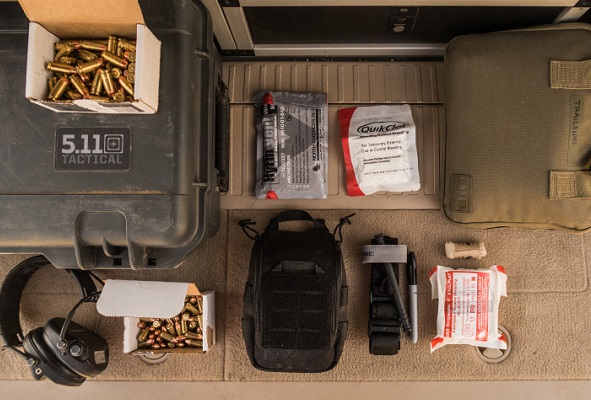
A properly organised IFAK should keep essential medical equipment secure, easy to identify and accessible when needed.
For law enforcement, military, EMS and other professional users, your organisation’s SOP should determine what equipment you carry and where your IFAK is positioned. For personal or general preparedness use, choose a setup appropriate to your training and intended environment.
Choosing the Right Individual First Aid Kit
The first consideration is capacity. Your pouch needs enough space for the medical supplies you are trained and authorised to carry without becoming unnecessarily bulky or difficult to access.
A compact option such as the 3 x 6 Med Kit provides dedicated medical organisation in a MOLLE-compatible format.
Depending on your role and training, your IFAK may include:
- Disposable gloves
- Dressings and gauze
- Medical tape
- Permanent marker
- Trauma shears
- Other approved first-aid or medical supplies appropriate to your role
Professional and specialist medical equipment should only be carried and used in accordance with your training, scope of practice and organisational procedures.
If you want to build a customised kit, the UCR IFAK Pouch provides a compact MOLLE-compatible storage option that can be configured around your individual requirements.
Where to Place Your IFAK
For professional users, follow your organisation’s SOP and equipment-placement requirements.
Where you have flexibility, your IFAK should be positioned so that it is:
- Securely attached
- Accessible when required
- Reachable without unnecessary movement
- Positioned consistently within your equipment setup
- Located where it does not interfere with movement or other essential equipment
Placement should be tested while wearing your full equipment setup rather than assessed while the pouch is sitting on a table.
What Is an IFAK?
Quick answer: IFAK commonly stands for Individual First Aid Kit. It is a compact medical kit designed to keep essential first-aid equipment organised and accessible to an individual user.
An IFAK is generally smaller than a full EMS or medical bag. Its purpose is to keep a focused group of supplies together rather than carry every medical item available.
That makes pouch size, internal organisation and attachment method especially important.
IFAK Pouch vs Medical Pouch: What's the Difference?
| Type | Typical Purpose | Main Advantage |
| IFAK Pouch | Compact individual medical setup | Small footprint and fast access |
| General Medical Pouch | Broader first-aid or medical organisation | Greater flexibility and capacity |
| Medical Bag | Larger professional equipment load | Multiple equipment categories and greater capacity |
| MOLLE Medical Pouch | Modular medical storage | Can attach to compatible backpacks and carrying systems |
What Should You Look for in an IFAK Pouch?
The right pouch depends on what you need to carry and where the pouch will be positioned.
Useful features can include:
- Appropriate capacity: Enough space for your required supplies without unnecessary bulk.
- Internal organisation: Elastic loops, pockets or dividers help keep equipment separated.
- Accessible opening: Makes it easier to identify equipment quickly.
- Durable construction: Important for equipment carried regularly.
- Secure closure: Prevents supplies from becoming loose during movement.
- MOLLE compatibility: Useful when integrating the pouch with a compatible tactical bag or backpack.
- Consistent layout: Equipment should return to the same location after inspection or use.
Browse our current tactical and MOLLE pouches to compare different storage formats.
How Should You Organise an IFAK?
Keep the layout simple and consistent. Frequently accessed equipment should be easy to identify, similar supplies should stay together and the pouch should not be packed so tightly that equipment becomes difficult to remove.
Give Each Item a Consistent Position
Returning equipment to the same position helps make the pouch easier to inspect and use.
Keep Related Equipment Together
Group similar supplies instead of filling available space randomly.
Avoid Overpacking
A pouch that is packed beyond its intended capacity can become difficult to close, inspect and access.
If your required equipment no longer fits comfortably, move to a larger medical storage solution rather than forcing additional supplies into the pouch.
Check the Kit Regularly
Review your IFAK periodically and after use for:
- Missing supplies
- Expired items
- Damaged packaging
- Equipment that needs replacing
- Damage to the pouch or attachment system
Where Should You Put an IFAK?
The best IFAK position is one that is secure, consistent and accessible without interfering with your movement or other equipment. Professional users should always follow their organisation’s placement requirements.
If you have flexibility over placement, test the pouch while wearing your complete equipment setup.
Consider:
- Can you reach the pouch easily?
- Does it interfere with sitting, bending or movement?
- Does it block other equipment?
- Is it securely attached?
- Would you know exactly where to find it without looking?
Can You Attach an IFAK to a Backpack?
Yes, provided the pouch and backpack use compatible attachment systems.
A MOLLE-compatible IFAK can attach to suitable PALS webbing on a tactical backpack, allowing the medical kit to remain separate from the backpack’s primary storage.
Browse our tactical backpacks and bags if you are building a larger modular carrying setup.
Should an IFAK Be Inside or Outside a Backpack?
Either approach can work.
| Position | Advantage | Consideration |
| External pouch | Can improve access and preserve internal capacity | Adds external bulk |
| Inside backpack | Keeps the exterior streamlined and equipment protected | May take longer to access |
| Dedicated medical compartment | Combines protection with predictable organisation | Depends on the bag design |
Consistency is important. Wherever the IFAK is stored, it should return to the same location after every use or inspection.
How Does MOLLE Work with an IFAK?
MOLLE-compatible IFAK pouches attach to suitable PALS webbing using integrated or compatible attachment straps.
This allows the pouch to become part of a larger modular equipment setup rather than occupying space inside the main bag.
If you're unfamiliar with MOLLE, read our existing What Is MOLLE? guide and How Does MOLLE Work? article before configuring your backpack or pouch system.
IFAK vs First Aid Kit: What's the Difference?
The terms can overlap, but an IFAK generally refers to a compact individual kit designed around a focused set of essential medical supplies.
A general first-aid kit may be designed for broader everyday injuries and can range from a very small household kit to a much larger medical bag.
The right choice depends on:
- Your training
- Your role
- Your environment
- Your organisation’s requirements
- The amount of equipment you need to carry
IFAK vs Full Medical Bag
| Feature | IFAK | Medical Bag |
| Size | Compact | Medium to large |
| Equipment volume | Focused essential supplies | Broader equipment range |
| Mobility | High | Depends on bag size |
| Attachment options | Often MOLLE compatible | Usually carried independently or as a backpack |
| Best suited to | Individual compact medical setup | Larger professional or team requirements |
For broader professional setups, explore the 5.11 Fire & EMS range.
Can an IFAK Go in a Range Bag?
Yes. A dedicated medical pouch can help keep first-aid equipment separate from the rest of your range equipment.
If you're organising a larger setup, read our guide to packing a range bag.
Frequently Asked Questions About IFAKs
What does IFAK stand for?
IFAK commonly stands for Individual First Aid Kit.
Where should an IFAK be placed?
It should be securely positioned somewhere consistent and accessible without interfering with movement or other equipment. Professional users should follow their organisation’s SOP.
Should an IFAK be MOLLE compatible?
It isn't essential, but MOLLE compatibility can make the pouch easier to integrate with compatible backpacks and other modular equipment.
Can you put an IFAK on a backpack?
Yes, if both the backpack and pouch use compatible attachment systems.
How big should an IFAK pouch be?
Large enough to contain the supplies required for your role without being unnecessarily bulky or difficult to access.
How often should you check an IFAK?
Professional users should follow organisational procedures. More generally, inspect the kit regularly and after use for depleted, damaged or expired supplies.
Is an IFAK the same as a first-aid kit?
Not exactly. An IFAK is usually a compact individual medical setup, while the term first-aid kit can describe a much wider range of medical kits and capacities.
Choose the Right IFAK Pouch
A good IFAK setup should be simple, organised and practical to carry. Choose a pouch with enough capacity for your required equipment, keep its layout consistent and position it where it remains accessible without interfering with the rest of your gear.
For a compact ready-to-configure option, explore the UCR IFAK Pouch.
You can also compare the wider 5.11 Tactical Pouches range or browse Fire & EMS gear for larger professional carrying requirements.