 YOU ARE SHOPPING ON OUR


How to Clean Tactical Shoes and Boots
Keeping tactical footwear clean helps maintain its appearance, materials and performance, but the right cleaning method depends on what the shoe or boot is made from.
Smooth leather, suede, nylon, mesh and waterproof mixed-material uppers should not all be cleaned or treated in the same way. Start by identifying the materials in your footwear, remove loose dirt first and use the mildest cleaning method appropriate to the surface.
Quick answer: Remove the laces, brush away loose dirt with a soft-bristled brush and wipe appropriate surfaces with a damp cloth. Allow tactical shoes and boots to air dry naturally away from direct heat. Smooth leather can then be conditioned or polished if required, while suede, mesh and nylon need material-specific care. Always check the individual footwear construction before applying cleaning or waterproofing products.
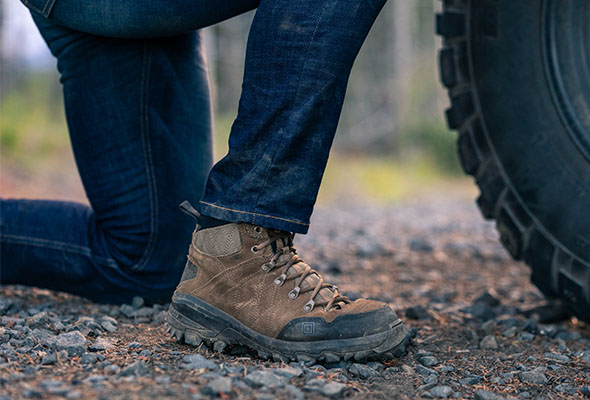
Start by Identifying the Material
Modern tactical footwear often combines several materials in the same shoe or boot.
A current 5.11 waterproof tactical boot, for example, can combine polishable leather or suede with breathable nylon mesh and a waterproof membrane. That means one cleaning product should not automatically be applied across the entire upper.
| Material | General Cleaning Approach |
| Smooth leather | Brush away dirt, wipe with a damp cloth, air dry and condition or polish when appropriate. |
| Suede | Allow heavy mud to dry, brush gently with a suede-safe or soft-bristled brush and spot-clean carefully where required. |
| Nylon or mesh | Brush away loose debris and clean gently with a damp cloth according to the product care instructions. |
| Waterproof mixed-material upper | Clean each external material appropriately and avoid harsh methods that could affect the upper, treatments or membrane system. |
| Polishable leather sections | Clean first. Polish only after the leather is clean and dry. |
The most important rule is simple: clean the material you actually have, not the material you assume a tactical boot should have.
What Do You Need to Clean Tactical Footwear?
A basic cleaning kit doesn't need to be complicated.
Useful items include:
- Soft-bristled brush
- Clean damp cloths
- Dry cotton cloth
- Small soft toothbrush or cotton swabs for difficult areas
- Suede-safe brush or eraser where appropriate
- Leather conditioner or wax where appropriate
- Mild cleaning product only when required and suitable for the material
Start mild. Most routine dirt does not require aggressive chemicals, heavy scrubbing or complete soaking. Remove loose debris first and increase the cleaning intensity only when necessary.
How to Clean Tactical Shoes and Boots Step by Step
Step 1: Remove the Laces
Removing the laces makes it easier to reach the tongue, eyelets and creases where dust and dirt can accumulate.
If the footwear has removable insoles and they need to dry or air out, remove them separately.
Step 2: Remove Loose Dirt
Use a soft-bristled brush to remove dust, dried mud and loose debris.
Work gently around:
- Seams
- Eyelets
- The tongue
- Upper creases
- The edge of the outsole
- Textured or recessed areas
A small soft toothbrush or cotton swab can help reach tighter areas without requiring aggressive scrubbing.
Step 3: Wipe the Appropriate Surfaces
Use a clean damp cloth to remove remaining surface dirt from materials that can be safely wiped.
The cloth should be damp rather than dripping wet.
Work gradually and regularly move to a clean section of the cloth instead of spreading dirt back across the footwear.
Step 4: Treat Stubborn Areas According to the Material
If ordinary brushing and wiping don't remove a mark, use a cleaning method specifically suitable for that material.
Do not automatically apply leather cleaner, detergent, solvent or waterproofing spray across the entire shoe or boot.
Step 5: Air Dry
Allow the footwear to dry naturally in a ventilated area.
Avoid direct heat. Hair dryers, heaters and other strong heat sources can dry leather too rapidly and can affect footwear materials, finishes or adhesives.
If boots are particularly wet, remove the laces and removable insoles and allow each component to dry separately.
Step 6: Condition or Polish Only When Appropriate
Once smooth leather is clean and completely dry, you can decide whether it needs conditioning or polishing.
Cleaning, conditioning and polishing are different processes:
| Process | Purpose |
| Cleaning | Removes dirt, dust, mud and surface contamination. |
| Conditioning | Helps maintain suitable leather when it becomes dry. |
| Polishing | Improves the appearance of suitable smooth leather. |
| Mirror shining | Creates a high-gloss cosmetic finish through repeated thin layers of polish. |
How to Clean Suede Tactical Boots
Suede requires a different approach from smooth polishable leather because its textured surface can be changed by heavy waxes and inappropriate cleaners.
Do not use conventional leather shoe polish on suede. Start with dry brushing and use suede-specific techniques only where additional cleaning is required.
Step 1: Let Heavy Mud Dry
If the suede is covered in wet mud, trying to scrub it immediately can spread the dirt further into the surface.
Allow heavy surface mud to dry where practical, then brush it away gently.
Step 2: Brush the Suede
Use a suede-safe or other suitable soft-bristled brush to remove dirt and help lift the surface fibres.
Work consistently rather than aggressively scrubbing the material.
Step 3: Address Scuffs Carefully
A suede eraser can sometimes help with minor marks and scuffs.
Test any cleaning technique on a small, inconspicuous area first if you are unsure how the material will react.
Step 4: Spot-Clean Only When Necessary
For marks that brushing doesn't remove, use a cleaning product or method appropriate for suede and follow its instructions.
5.11's existing care guidance includes gentle spot cleaning for suede rather than soaking the entire boot. :contentReference[oaicite:2]{index=2}
Step 5: Allow the Suede to Dry Naturally
Air dry the footwear away from direct heat, then gently brush the suede again if needed to restore the surface texture.
How to Clean Leather Tactical Boots
Smooth leather tactical boots are relatively straightforward to clean when you separate basic cleaning from polishing.
1. Remove the Laces
This gives you better access to the tongue, eyelets and upper.
2. Brush Away Dirt
Use a soft-bristled brush with gentle back-and-forth movements to remove dust, dirt and other loose particles.
3. Wipe With a Damp Cloth
Remove any surface dirt left after brushing, then allow the leather to air dry.
4. Check the Condition of the Leather
If the leather appears healthy, routine cleaning may be enough.
If it feels dry, an appropriate leather conditioner or wax may help maintain it. Always follow the instructions on the care product and test it on a less visible area first because some treatments can darken leather.
5. Polish Only if You Want or Need a Shine
Polishing is not required every time you clean your boots.
If professional presentation or personal preference calls for a polished finish, use thin layers on suitable smooth leather after the boots are clean and dry.
For the full process, see our guide to shining tactical boots.
How to Clean Waterproof Tactical Boots
Waterproof boots still need cleaning, but waterproofing does not mean the footwear should be submerged or aggressively washed.
Current 5.11 waterproof boots illustrate why material-specific care matters. The A/T™ 8" Waterproof Non-Zip Boot combines waterproof polishable leather and suede with breathable nylon mesh and a Tac Dry® waterproof membrane. :contentReference[oaicite:3]{index=3}
The A/T™ 8" Waterproof Side Zip uses waterproof polishable leather, nylon mesh and the same Tac Dry® membrane system. :contentReference[oaicite:4]{index=4}
For this type of mixed construction:
- Brush loose dirt away first
- Clean the external materials appropriately
- Avoid harsh solvents
- Do not deliberately saturate the footwear
- Allow it to air dry naturally
- Use leather-care products only on the leather sections they are intended for
Browse 5.11 Waterproof Tactical Boots to compare current footwear designed for wet environments.
How to Clean Tactical Shoes and Trainers
Low-cut tactical shoes and trainers can use different materials from traditional duty boots, including high-abrasion mesh, synthetic overlays, suede and technical midsoles.
That makes a gentle approach particularly important.
For routine cleaning:
- Remove loose dust and dirt with a soft brush.
- Wipe suitable upper materials with a damp cloth.
- Clean the outsole separately where needed.
- Remove the insoles if they need to air out.
- Let the shoes dry naturally.
Do not assume a tactical trainer can be treated like a full-grain leather boot simply because both sit within the tactical footwear category.
See the current 5.11 Tactical Shoes range for low-profile and training-focused footwear.
How to Clean Mud Off Tactical Boots
For light mud, remove loose material with a soft brush once it can be brushed away cleanly.
For heavier mud:
- Remove the laces.
- Allow thick surface mud to dry where appropriate.
- Brush away as much as possible.
- Use a damp cloth on suitable materials for the remaining dirt.
- Clean seams and recessed areas gently.
- Allow the footwear to air dry completely.
Avoid turning a routine mud cleanup into a complete soak unless the manufacturer's instructions specifically require it.
How to Dry Tactical Boots Properly
Drying is part of the cleaning process, particularly after rain, mud or long periods of wear.
Air drying is the safest default. Remove the laces and removable insoles, wipe away excess moisture and leave the boots in a ventilated area away from direct heat.
5.11's leather-care guidance specifically recommends air drying and warns against shoe dryers and hair dryers because rapidly drying leather can make it brittle and prone to cracking. :contentReference[oaicite:5]{index=5}
If leather boots are particularly wet, loosely placing absorbent paper inside can help draw out moisture. Replace it as required rather than tightly packing the boot.
Can You Put Tactical Shoes in the Washing Machine?
Don't assume you can.
Footwear may contain leather, suede, adhesives, waterproof membranes, structured midsoles and other components that make machine washing inappropriate.
Check the product care instructions before machine washing any tactical footwear.
When in doubt, hand cleaning with a soft brush and damp cloth is the safer starting point.
How Often Should You Clean Tactical Boots?
There is no universal schedule.
Clean them when the condition of the footwear requires it.
You may need more frequent cleaning if your boots are regularly exposed to:
- Mud
- Dust
- Salt
- Wet conditions
- Worksite debris
- Outdoor environments
Footwear used primarily indoors or casually may need considerably less maintenance.
5.11's leather-care guidance recommends judging conditioning frequency according to the condition of the leather and how heavily the boots are used rather than following one fixed timetable. :contentReference[oaicite:6]{index=6}
Cleaning Tactical Footwear for Australian Conditions
Australian environments can expose tactical footwear to very different forms of wear, from dry dust and summer heat to wet winter shifts, mud and hard urban surfaces.
Hot and Dusty Conditions
Dust can accumulate around seams, eyelets and flex points even when footwear doesn't look heavily soiled.
Regular light brushing can be more useful than waiting until the boots require a major clean.
Wet Weather
Remove surface dirt and let wet footwear dry naturally before storing it or applying leather-care products.
If wet conditions are a regular part of your work or outdoor use, choose footwear designed for those conditions rather than relying on care products to turn ordinary footwear into waterproof boots.
Work and Duty Use
Police, security, emergency-service and work users may need to balance appearance with function.
Clean the entire boot appropriately first. If uniform presentation requires polishable leather, polish those sections only after cleaning and drying.
Salt, Sand and Coastal Conditions
Remove loose sand and residue rather than allowing abrasive particles to remain around flex points and seams.
Use gentle cleaning appropriate to the material and avoid unnecessary heavy soaking.
How to Clean the Inside of Tactical Boots
The interior of tactical footwear also deals with moisture from repeated wear.
For routine maintenance:
- Remove removable insoles and let them air out
- Allow the interior of the boot to dry between heavy uses
- Use clean, moisture-managing socks
- Follow the product instructions before applying any interior cleaner
- Replace worn insoles when necessary
5.11 offers tactical socks designed around moisture management and comfort for training, duty and boot use. :contentReference[oaicite:7]{index=7}
Common Tactical Footwear Cleaning Mistakes
Using the Same Product on Every Material
Leather, suede, nylon and mesh have different care requirements. Mixed-material boots should be treated section by section.
Applying Polish Before Cleaning
Polish should not be used to hide dirt. Clean suitable leather first, allow it to dry and then decide whether polishing is necessary.
Soaking the Entire Boot
Complete saturation is unnecessary for normal cleaning and can be unsuitable for mixed-material construction, membranes and adhesives.
Using Harsh Chemicals Immediately
Start with the mildest effective method. Strong products can alter colour, texture or finishes.
Using Direct Heat to Dry Boots
Rapid heat can negatively affect leather and other footwear components. Air drying is the safer default.
Putting Wax Polish on Suede
Conventional wax polish can change suede's appearance and texture. Use suede-appropriate care instead.
Assuming Waterproof Means Maintenance-Free
Waterproof footwear still needs dirt removed and its external materials cared for correctly.
Frequently Asked Questions About Cleaning Tactical Shoes and Boots
What is the best way to clean tactical boots?
Remove the laces, brush away loose dirt, wipe suitable surfaces with a damp cloth and let the boots air dry. Use additional care products only according to the material and product instructions.
How do you clean suede tactical boots?
Allow heavy mud to dry, brush the suede gently with a suitable soft brush and spot-clean persistent marks with a suede-appropriate method. Avoid conventional wax shoe polish.
How do you clean leather tactical boots?
Brush away dust and dirt, wipe the leather with a damp cloth and allow it to air dry. Condition or polish the leather afterward only when appropriate.
Can tactical boots be washed with water?
A damp cloth and limited water are commonly useful for surface cleaning, but completely soaking tactical boots is not recommended as a general cleaning method. Check the materials and footwear instructions first.
Can I put tactical boots in the washing machine?
Do not assume tactical footwear is machine washable. Leather, suede, waterproof membranes, adhesives and structured components may make machine washing inappropriate.
How do you dry tactical boots after cleaning?
Remove the laces and removable insoles and let the footwear air dry in a ventilated location away from direct heaters, hair dryers or other strong heat sources.
Can I use shoe polish on suede tactical boots?
No. Conventional leather wax polish is intended for suitable smooth leather and can change the texture and colour of suede.
How often should tactical boots be cleaned?
Clean them when dirt, mud, dust or other contamination accumulates. Footwear used regularly outdoors or in demanding conditions may need cleaning much more frequently than footwear used casually.
Do waterproof tactical boots need cleaning?
Yes. Waterproof construction helps manage water entry but does not prevent mud, dust and other debris from accumulating on the exterior materials.
Should I polish tactical boots every time I clean them?
No. Cleaning and polishing are separate processes. Polish suitable smooth leather when appearance or leather condition requires it rather than automatically adding polish after every clean.
Keep Tactical Footwear Clean Without Overcomplicating It
Good tactical footwear care starts with understanding the materials.
Remove dirt before it becomes heavily embedded, use a soft brush and damp cloth for routine cleaning, allow footwear to air dry and treat leather, suede and technical materials according to their individual requirements.
You don't need to soak boots, aggressively scrub them or apply multiple care products every time they get dirty.
Explore 5.11 Tactical Boots, browse 5.11 Tactical Shoes, compare Waterproof Tactical Boots or see the complete 5.11 Footwear range.