 YOU ARE SHOPPING ON OUR


Tactical Belt Guide for EDC
Tactical Belt Guide for Everyday Carry
An everyday carry belt should do more than simply hold your pants in place. The right tactical belt can provide greater structure, durability and adjustment when you're carrying everyday work, travel or outdoor equipment.
But not every EDC setup needs a heavy equipment belt. For most users, the best belt is the one that provides enough support for what they actually carry without adding unnecessary stiffness, bulk or weight.
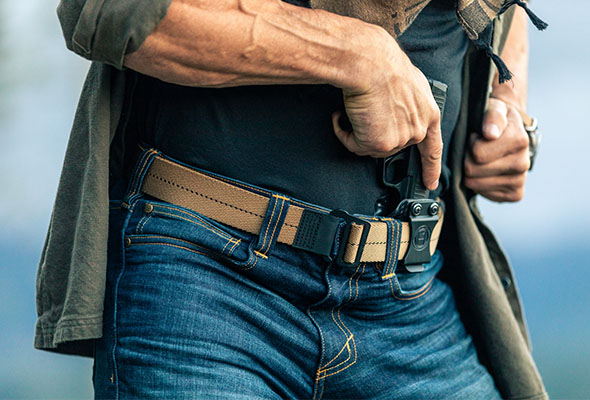
Quick answer: Choose an EDC belt with enough rigidity to support your normal load, a secure buckle, comfortable adjustment and a width that fits your pants. For light everyday carry, a low-profile belt may be enough. Heavier work or professional equipment can require a more structured tactical or duty belt.
What Is an EDC Belt?
EDC stands for everyday carry — the equipment you regularly carry throughout the day.
That can include items such as:
- Phone
- Wallet
- Keys
- Multi-tool
- Torch
- Small utility pouch
- Work equipment
- Medical or first-aid equipment
An EDC belt provides a stable platform for your clothing and any compatible belt-mounted equipment you genuinely need.
EDC does not mean carrying as much equipment as possible. A good setup should make useful items easier to carry without unnecessarily increasing weight, bulk or discomfort.
EDC Belt vs Regular Belt
| Feature | Regular Belt | EDC / Tactical Belt |
| Primary Purpose | Hold clothing in place | Clothing support plus greater structure for everyday equipment |
| Rigidity | Usually light to moderate | Ranges from moderately structured to highly rigid |
| Adjustment | Often fixed holes | Many designs allow more precise adjustment |
| Load Support | Limited | Designed with additional load support in mind |
| Construction | Varies widely | Typically prioritises durable materials and reinforced construction |
What Makes a Good EDC Belt?
The best EDC belt balances support and comfort.
Look for:
- Appropriate rigidity: enough structure to support your normal load without excessive stiffness.
- Secure buckle: the belt should stay at the selected adjustment throughout the day.
- Durable webbing or leather: suitable for repeated everyday use.
- Reinforced construction: particularly around load-bearing areas.
- Comfort: especially while sitting, driving and bending.
- Correct width: the belt needs to pass through the loops on the pants you actually wear.
- Useful adjustability: enough range to fine-tune fit as clothing and equipment change.
How Rigid Should an EDC Belt Be?
Rigidity is one of the biggest differences between an ordinary belt and a purpose-built tactical belt.
But maximum rigidity is not automatically better.
| Typical Load | Useful Starting Point |
| Phone, wallet, keys | Light or moderately structured everyday belt |
| Multi-tool, torch or small pouch | Moderately rigid tactical belt |
| Heavier work equipment | More structured load-supporting belt |
| Dedicated professional equipment setup | Purpose-built duty or equipment belt rather than a conventional EDC belt |
A good rule: use the least amount of rigidity that still supports your actual equipment comfortably and securely.
5.11 EDC Belt Options in Australia
The current 5.11 Australia belt range includes everything from lightweight TDU belts to dedicated equipment platforms. :contentReference[oaicite:2]{index=2}
That makes it useful to think about belts by role rather than trying to choose one universal model.
Maverick EDC 1.5 Belt
The Maverick EDC 1.5 Belt is the clearest current 5.11 example of a belt designed specifically around everyday carry.
It sits between a casual belt and a larger professional equipment system, making it a logical option when you want more support while retaining an everyday profile.
1.5" Trainer Belt
The current 1.5" Trainer Belt provides a straightforward nylon tactical-belt option suitable for work, training and everyday use. It is currently available through the AU Tactical Belts category. :contentReference[oaicite:3]{index=3}
A 1.5-inch belt is also compatible with many standard tactical and work-pant belt loops, although the individual garment should always be checked.
1.75" Operator Belt
The 1.75" Operator Belt offers a wider, more structured platform for users who want additional belt support. It remains part of both the main AU Tactical Belts category and the law-enforcement belt assortment. :contentReference[oaicite:4]{index=4}
Because it is wider, confirm that the belt loops on your preferred pants can accommodate it before choosing this type of belt.
TDU Belts
5.11's TDU® belts provide a simpler, lighter-weight option for users who want durable webbing without the additional structure or complexity of a larger equipment belt.
The current AU range includes 1.5" and 1.75" TDU® belts as well as low-profile and Double Duty versions. :contentReference[oaicite:5]{index=5}
EDC Belt vs Duty Belt
An everyday carry belt and a duty belt solve different problems.
| EDC Belt | Duty Belt | |
| Main Purpose | Everyday clothing and lighter equipment support | Professional equipment carriage |
| Profile | Lower profile | Larger and more structured |
| Equipment Capacity | Light to moderate | Designed for multiple role-specific items |
| Everyday Wear | Very suitable | Usually unnecessary outside professional use |
| Typical Examples | Maverick EDC, Trainer, Operator, TDU | Sierra Bravo Duty Belt and other dedicated equipment systems |
The current AU range includes the Sierra Bravo Duty Belt - 2" for users who specifically need a professional equipment platform. :contentReference[oaicite:6]{index=6}
EDC Belt vs Battle Belt
A battle belt is another step beyond a standard everyday belt.
Dedicated equipment belts such as the Maverick Battle Belt and Maverick Assaulters Belt are built around configurable load carriage rather than ordinary everyday clothing support. Both remain part of the current Australian assortment. :contentReference[oaicite:7]{index=7}
| EDC Belt | Battle / Equipment Belt |
| Usually passes through normal pants loops | Can operate as a dedicated outer-belt system |
| Lower profile | Designed around attached equipment |
| Useful for everyday work and travel | Designed for professional, training or specialised equipment use |
| Limited attachment space | Greater modular equipment capacity |
Nylon vs Leather EDC Belts
Material affects appearance, adjustment and how the belt feels.
| Feature | Nylon | Leather |
| Appearance | Technical / work-focused | More traditional |
| Adjustment | Often highly adjustable | Depends on buckle construction |
| Weight | Usually lighter | Usually heavier |
| Weather | Generally easy to maintain | May require additional care |
| Everyday Use | Excellent | Excellent |
The current Australian range includes both reinforced nylon belts and the 1.5" Basketweave Leather Belt, allowing the material choice to be driven by the user's environment and preferred appearance. :contentReference[oaicite:8]{index=8}
Why Belt Width Matters
Width affects compatibility with both clothing and equipment.
Current 5.11 AU belts include common widths such as:
- 1.5 inches
- 1.75 inches
- 2 inches on dedicated duty systems
Before purchasing an everyday belt, check the belt loops on the pants or shorts you intend to wear.
A wider belt can provide a larger platform, but that does not automatically make it more comfortable or better for everyday use.
How Should an EDC Belt Fit?
The belt should be secure enough to remain in position without unnecessarily compressing your waist.
When testing fit:
- Wear the pants you normally use.
- Add the everyday items you usually carry.
- Adjust the belt until the load feels stable.
- Sit down and check for pressure from the buckle or equipment.
- Walk, bend and move normally.
- Make sure the belt does not loosen or shift excessively.
The real test is how the complete setup feels during normal activity, not how rigid the belt feels when you hold it in your hands.
EDC Belts and Tactical Pants
The belt and pants should work together.
Purpose-built tactical pants can provide secure pockets for everyday equipment, reducing the amount of gear that needs to sit directly on the belt.
Current 5.11 Men's Tactical Pants include products such as Stryke®, Ridge, Apex®, ABR™ Pro and Defender-Flex, each with different approaches to storage and everyday use. :contentReference[oaicite:9]{index=9}
Think of pants and belt as one carry system. Use pockets for items that work better in clothing and belt-mounted equipment only where the extra accessibility or support is genuinely useful.
EDC Belts for Work
Workplaces can create different belt requirements depending on the tools and equipment being carried.
Useful features can include:
- Durable construction
- Precise adjustment
- Compatibility with work pants
- Enough rigidity for tools or pouches
- Comfort while sitting or driving
- Resistance to repeated daily wear
If work equipment becomes significantly heavier, consider whether a dedicated work or duty platform is more appropriate than simply choosing a stiffer everyday belt.
EDC Belts for Travel and Outdoor Use
For travel or outdoor use, lower weight and simple adjustment may matter more than maximum rigidity.
Consider:
- Weight
- Comfort during long periods of wear
- Ease of adjustment
- Weather resistance
- Compatibility with backpacks
- Whether a bulky buckle becomes uncomfortable when seated
A lightweight TDU or Trainer-style belt may be more useful in these situations than a full equipment belt.
Do You Need MOLLE on an EDC Belt?
Usually not for basic everyday carry.
MOLLE becomes more useful when the belt is intended as a configurable equipment platform rather than a normal pants belt.
If you only carry a phone, wallet, keys and a few utility items, MOLLE can add complexity without solving a real problem.
Does an EDC Belt Need a D-Ring?
No.
D-rings appear on some specialised tactical belts, including current Maverick equipment platforms, but they are not necessary for ordinary EDC.
Do not assume a D-ring makes a belt suitable for climbing, fall arrest or life-safety use. Only use equipment for those applications when the specific product is expressly designed and certified for them.
EDC Belt Considerations for Australian Users
The EDC concept in Australia is broader than the concealed-carry emphasis found in many US belt guides.
For most Australian customers, useful everyday belt applications are more likely to include:
- Work
- Trades
- Security and authorised professional use
- Outdoor activities
- Travel
- Tools and utility equipment
- Everyday apparel
This makes comfort, pants compatibility, durability and practical load support more useful buying criteria than building the entire decision around civilian firearm carry.
Common EDC Belt Buying Mistakes
Buying the Stiffest Belt Available
Maximum rigidity can be unnecessary and uncomfortable if your everyday load is light.
Ignoring Belt-Loop Width
Check your pants before buying the belt. A 1.75-inch or wider belt may not work with every garment.
Choosing an Equipment Belt for Basic EDC
A battle or duty belt can provide significant load capacity but may be unnecessary for ordinary everyday use.
Adding Equipment Because the Belt Can Hold It
Carry what you actually need. More capacity should not automatically mean more gear.
Ignoring Sitting and Driving Comfort
A belt that feels good while standing may become uncomfortable after several hours seated.
Ignoring Your Pants
Pockets, waistband construction and belt loops all affect how well the complete system performs.
Frequently Asked Questions About EDC Belts
What is an EDC belt?
An EDC belt is an everyday belt designed with enough durability and structure to support normal clothing plus compatible everyday equipment.
Do I need a tactical belt for EDC?
Not necessarily. A tactical belt becomes useful when you want greater durability, support or adjustment than a conventional belt provides.
How stiff should an EDC belt be?
Choose enough rigidity to support your normal load without adding unnecessary stiffness. Light everyday carry generally requires less structure than professional equipment.
Is a 1.5-inch or 1.75-inch tactical belt better?
Neither width is universally better. A 1.5-inch belt fits a wider range of ordinary belt loops, while a 1.75-inch belt can provide a broader platform when compatible with the clothing.
What is the best 5.11 belt for everyday carry?
The current AU range includes the Maverick EDC 1.5 Belt specifically for everyday carry, while the Trainer, Operator and TDU belts provide different balances of structure, width and simplicity. :contentReference[oaicite:10]{index=10}
What is the difference between an EDC belt and a duty belt?
An EDC belt is designed around everyday clothing and lighter loads, while a duty belt is a more structured platform intended for professional equipment carriage.
Can you wear a tactical belt every day?
Yes. Many tactical belts are specifically suited to everyday work, travel and outdoor use. Choose the level of rigidity and buckle size around how you actually use it.
Are nylon or leather belts better for EDC?
Both can work well. Nylon generally offers low weight and precise adjustment, while leather provides a more traditional appearance. Construction matters more than material alone.
Do you need MOLLE for everyday carry?
Usually not. MOLLE is most useful on dedicated modular equipment systems rather than basic everyday pants belts.
Choose an EDC Belt Around What You Actually Carry
The best everyday carry belt should disappear into your routine rather than constantly remind you that you're wearing it.
Start with your normal load. Then choose the amount of rigidity, width, buckle design and construction required to support it comfortably.
For lighter everyday use, a simple TDU or Trainer-style belt may be enough. For more structured everyday carry, the Maverick EDC provides a dedicated option. Professional users carrying larger equipment loads should consider duty or equipment-belt systems instead.
Explore the current 5.11 Tactical Belts, browse 5.11 Men's Tactical Pants, or see the wider 5.11 Tactical Accessories range.