6-Inch vs 8-Inch Tactical Boots: Which Height Is Right for You?
Choosing between 6-inch and 8-inch tactical boots comes down to more than simply wanting a shorter or taller boot. Boot height changes how much of your ankle and lower leg is covered, how the upper feels during movement and how the footwear works with your job, uniform and environment.
A 6-inch tactical boot can make sense when you prefer a lower profile and more freedom around the lower leg. An 8-inch boot provides greater coverage and is widely used across duty, law enforcement, security and outdoor applications. Neither height is automatically better for everyone.
Quick answer: Choose 6-inch tactical boots when you want a lower-profile boot with less material around the lower leg and greater freedom of movement. Choose 8-inch tactical boots when you want more ankle and lower-leg coverage or your role or uniform requires taller footwear. Do not choose by height alone — fit, support, traction, waterproofing, safety protection and workload still matter.
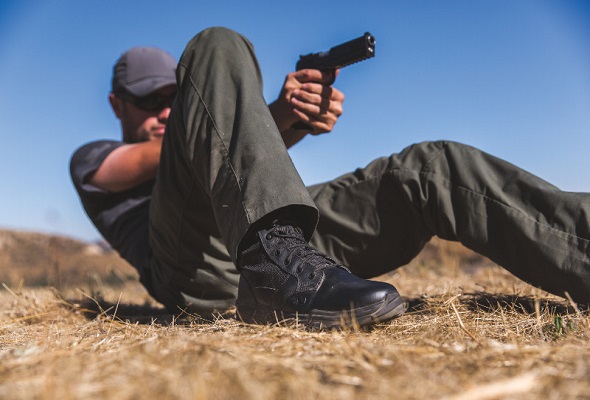
What Does 6-Inch or 8-Inch Boot Height Mean?
The measurement refers to the approximate height of the boot upper from the outsole area toward the top of the boot.
The extra height changes how much of the ankle and lower leg is covered, but it does not tell you everything about support, comfort or performance.
Two boots of different heights can still share:
- The same midsole technology
- Similar footbeds
- Similar outsole construction
- Comparable heel support
- Similar upper materials
This is why boot height should be treated as one part of the footwear decision rather than a shortcut for deciding which boot is “better.”
6-Inch vs 8-Inch Tactical Boots at a Glance
| Consideration | 6-Inch Tactical Boots | 8-Inch Tactical Boots |
| Lower-leg coverage | Less coverage | Greater coverage |
| Freedom around the ankle | Generally greater | More upper material around the ankle and lower leg |
| Weight | Often lighter when comparing similar constructions | Can be slightly heavier because of the additional upper material |
| Duty / uniform use | Common where lower boot height is permitted | Common in law enforcement, security and other professional settings |
| Outdoor coverage | Lower profile | Greater coverage against brush, debris and environmental exposure |
| Hot conditions | Less material around the lower leg can feel preferable for some users | Breathable construction becomes particularly important |
What Are the Advantages of 6-Inch Tactical Boots?
A 6-inch tactical boot sits lower on the ankle and lower leg than an 8-inch boot.
That can make it a strong option for users who prioritise:
- Mobility
- A lower-profile feel
- Less material around the lower leg
- Faster transitions between walking, driving and active movement
- Work environments that do not require taller footwear
Current 5.11 Australia 6-inch options include the A/T 6" Non-Zip, A/T 6" Side Zip, A.T.A.C.® 2.0 Shield and other duty, desert and work-focused models. :contentReference[oaicite:2]{index=2}
Who Are 6-Inch Tactical Boots Best For?
There is no universal job that requires 6-inch footwear, but they can be a practical starting point for:
- Security
- Police where uniform requirements allow them
- Emergency-service roles
- Warehouse and logistics work
- Trades
- Outdoor users wanting less lower-leg coverage
- People transitioning from conventional shoes or lower footwear
Think of 6-inch boots as the lower-profile option, not the “less supportive” option. Support depends on the complete boot design, including the midsole, heel structure, footbed and fit.
What Are the Advantages of 8-Inch Tactical Boots?
An 8-inch tactical boot extends further up the ankle and lower leg.
The main advantage is additional coverage.
This can be useful for users who want:
- More ankle and lower-leg coverage
- Taller professional or duty footwear
- Greater separation between the leg and brush, debris or environmental exposure
- A boot height required by an organisation or uniform policy
- A taller platform for outdoor or operational use
The current Australian 8-inch range includes A/T, A.T.A.C.® Shield, Storm, ARID, Side Zip and waterproof styles. :contentReference[oaicite:3]{index=3}
Do 8-Inch Boots Give More Ankle Support?
Not automatically.
Boot height provides more coverage, but support comes from the complete footwear system. Midsole structure, heel hold, lacing, fit, footbed and outsole stability all contribute to how supportive a boot feels.
A poorly fitting 8-inch boot is not automatically more supportive than a correctly fitted 6-inch boot.
The current 5.11 A/T 6" Non-Zip and A/T 8" models both use the A.T.L.A.S.™ support system, which is designed to help distribute load and maintain comfort during long shifts. The main difference created by height is the amount of upper around the ankle and lower leg. :contentReference[oaicite:4]{index=4}
Are 6-Inch Boots Better for Mobility?
They can feel less restrictive because there is less material around the lower leg.
This can make 6-inch boots appealing for users who regularly:
- Drive
- Climb stairs
- Crouch
- Move between standing and kneeling
- Walk quickly through indoor environments
However, mobility also depends on outsole flexibility, boot weight, upper materials and how tightly the boot is laced.
Do not assume every 6-inch boot will automatically feel lighter or more flexible than every 8-inch boot.
Are 8-Inch Boots Better for Outdoor Use?
They can be useful when additional lower-leg coverage is valuable.
Examples include:
- Brush
- Loose debris
- Mud
- Outdoor duty
- Rough terrain
- Long periods outside
But boot height does not replace the need for appropriate traction, waterproofing or durable upper materials.
If wet weather is the primary issue, choose a boot specifically designed with waterproof construction rather than assuming an 8-inch boot is automatically better in rain.
6-Inch vs 8-Inch Boots for Police and Security
Police and security footwear needs can vary by organisation, role and environment.
Common considerations include:
- Uniform requirements
- Hours spent standing or walking
- Amount of driving
- Equipment load
- Weather
- Need for polishable areas
- Preference for side-zip access
A 6-inch boot can be practical where mobility and lower-profile footwear are preferred.
An 8-inch boot provides greater coverage and remains common in professional duty applications.
Always check your organisation's footwear requirements before choosing a boot height.
6-Inch vs 8-Inch Boots for Long Shifts
For long shifts, height is less important than the support platform and fit.
Look at:
- Footbed cushioning
- Midsole support
- Heel hold
- Outsole stability
- Boot weight
- Upper breathability
- How much equipment you carry
The 5.11 A/T 6" and 8" platforms are useful examples because both use A.T.L.A.S.™ support technology designed around people carrying additional work weight over long periods. :contentReference[oaicite:5]{index=5}
6-Inch vs 8-Inch Boots for Hot Weather
In hot conditions, boot height matters less than the complete upper construction, but the additional material of a taller boot can make breathability more important.
For Australian summer conditions, consider:
- Breathable mesh or textile panels
- Upper material weight
- Whether waterproofing is actually required
- Sock thickness
- How many hours you'll wear the boots
The current AU range includes dedicated ARID and breathable styles alongside waterproof boots, which reflects the different requirements created by hot and wet Australian environments. :contentReference[oaicite:6]{index=6}
6-Inch vs 8-Inch Waterproof Boots
Waterproofing is independent of boot height.
You can have:
- 6-inch waterproof boots
- 8-inch waterproof boots
- 6-inch non-waterproof boots
- 8-inch non-waterproof boots
Choose waterproof construction because your environment requires it, then decide which height gives you the appropriate coverage and mobility.
6-Inch vs 8-Inch Side-Zip Boots
Both heights can be available with side zippers.
The zipper primarily changes how quickly the boot can be put on or removed.
The laces should still establish the fit.
Current 5.11 Australia examples include both the A/T 6" Side Zip Boot and the A/T 8" Side Zip Boot. Both use A.T.L.A.S.™ support, locking ankle eyelets and high-traction outsoles, making height rather than the core support system one of the key differences between the two platforms. :contentReference[oaicite:7]{index=7}
6-Inch vs 8-Inch Boots for Worksites
Worksite footwear should be chosen around safety requirements first.
Boot height does not determine whether footwear is safety-rated. If your workplace requires protective toes, puncture resistance, waterproofing or specific certification, check those requirements separately.
The current 5.11 Australian range includes both 6-inch and 8-inch safety-focused footwear, so you can select height after confirming the protective features you actually need. :contentReference[oaicite:8]{index=8}
6-Inch vs 8-Inch Tactical Boots for Australian Conditions
Australian conditions make boot height a practical rather than purely aesthetic decision.
| Australian Use Case | 6-Inch Starting Point | 8-Inch Starting Point |
| Hot Urban Shift | Less material around the lower leg | Choose breathable construction if greater coverage is required |
| Wet Outdoor Shift | Waterproof 6-inch option where available | Waterproof 8-inch option for additional coverage |
| Police / Security | Useful where lower-profile footwear is permitted | Greater coverage and common duty profile |
| Driving / Indoor Movement | Often preferred for lower-leg freedom | Appropriate where greater coverage is required |
| Outdoor Terrain | Lower profile with appropriate traction | Additional lower-leg coverage |
| Worksite | Choose according to safety requirements and mobility | Choose according to safety requirements and desired coverage |
5.11 A/T 6" vs A/T 8" Tactical Boots
The A/T range provides a useful first-party comparison because the 6-inch and 8-inch platforms share much of the same underlying performance philosophy.
| Feature | A/T 6" Platform | A/T 8" Platform |
| Support System | A.T.L.A.S.™ | A.T.L.A.S.™ |
| Primary Difference | Lower-profile upper | Taller upper with greater lower-leg coverage |
| Long-Shift Use | Designed around work weight and extended use | Designed around work weight and extended use |
| Side-Zip Availability | Available on selected models | Available on selected models |
| Best Starting Point | Choose when lower profile and mobility are priorities | Choose when greater coverage is a priority |
The A/T 6" Non-Zip Boot uses water-resistant suede, high-abrasion air-mesh nylon and the A.T.L.A.S.™ support platform. :contentReference[oaicite:9]{index=9}
The A/T 8" range uses the same load-support philosophy while extending the upper higher around the ankle and lower leg. :contentReference[oaicite:10]{index=10}
How Should 6-Inch and 8-Inch Boots Fit?
Both heights should fit securely without painful pressure.
Your heel should be held effectively, your toes should have appropriate room and you should not need extreme lace tension just to keep your foot stable.
With an 8-inch boot, pay additional attention to how the upper feels around your ankle and lower leg.
With a 6-inch boot, check whether the lower collar sits comfortably during walking, crouching and driving.
Do 8-Inch Boots Take Longer to Break In?
Not necessarily.
An 8-inch boot has more upper material, so users who aren't accustomed to taller footwear may notice the ankle and lower-leg section more during early wear.
But break-in time depends on:
- Upper materials
- Boot construction
- Fit
- Foot shape
- How gradually you increase wear time
A modern 8-inch boot does not automatically need a longer break-in period than a 6-inch boot.
Common 6-Inch vs 8-Inch Boot Buying Mistakes
Assuming 8-Inch Automatically Means More Support
Height provides more coverage. Support depends on the full footwear design.
Assuming 6-Inch Boots Are Always Lighter
They often use less upper material, but total weight depends on the sole, protective features, waterproofing and materials.
Choosing Height Before Checking Uniform Requirements
Your employer or organisation may specify boot height, colour or other footwear requirements.
Ignoring Climate
Greater coverage can be useful, but Australian heat makes upper breathability particularly important.
Choosing 8-Inch Boots for Waterproofing
Waterproofing is a separate feature. Both heights can be available in waterproof and non-waterproof configurations.
Choosing 6-Inch Boots Only for Mobility
Height affects lower-leg coverage, but outsole flexibility, boot weight, fit and upper construction also influence how mobile a boot feels.
Frequently Asked Questions About 6-Inch vs 8-Inch Tactical Boots
Are 6-inch or 8-inch tactical boots better?
Neither height is universally better. Choose 6-inch boots when you prefer a lower profile and more freedom around the lower leg. Choose 8-inch boots when greater ankle and lower-leg coverage is more important.
Do 8-inch boots provide more ankle support?
They provide more coverage, but support depends on the entire boot, including fit, heel hold, midsole structure, lacing and footbed.
Are 6-inch boots better for running or fast movement?
They can feel less restrictive around the lower leg, but overall mobility also depends on boot weight, outsole flexibility, upper construction and fit.
Are 8-inch boots better for police?
They are common in law enforcement because they provide greater coverage, but individual police organisations may allow or require different footwear. Always check uniform regulations.
Are 6-inch boots better for hot weather?
Less upper material can feel preferable in hot conditions, but breathability and material construction matter more than height alone.
Are 8-inch boots waterproof?
Not automatically. Waterproofing is a separate feature that needs to be confirmed on the individual boot.
Are 6-inch boots good for long shifts?
Yes, when the boot provides appropriate fit, cushioning and support. Current 5.11 A/T 6-inch boots are specifically designed around users carrying additional work weight through long periods of activity. :contentReference[oaicite:11]{index=11}
Are 8-inch boots heavier?
They can be slightly heavier than comparable 6-inch versions because they use more upper material, but the complete construction determines total weight.
Can you get side-zip boots in both heights?
Yes. 5.11 Australia currently offers side-zip tactical boots in both 6-inch and 8-inch platforms. :contentReference[oaicite:12]{index=12}
Which tactical boot height is best for Australia?
It depends on your role and environment. Hot urban work may favour a lower profile or breathable construction, while outdoor, duty or uniformed roles may benefit from greater 8-inch coverage. Waterproofing, safety protection and support should be considered separately.
Choose Boot Height Around Coverage and Use
The main difference between 6-inch and 8-inch tactical boots is the amount of ankle and lower-leg coverage they provide.
Choose 6-inch boots when you value a lower-profile feel and greater freedom around the lower leg. Choose 8-inch boots when greater coverage suits your job, environment or uniform requirements.
Then evaluate the rest of the footwear separately: fit, support, waterproofing, traction, safety protection, side-zip access and materials.
Explore the current 5.11 6-Inch Tactical Boots, compare 5.11 8-Inch Tactical Boots, or browse the complete 5.11 Tactical Boots range.