
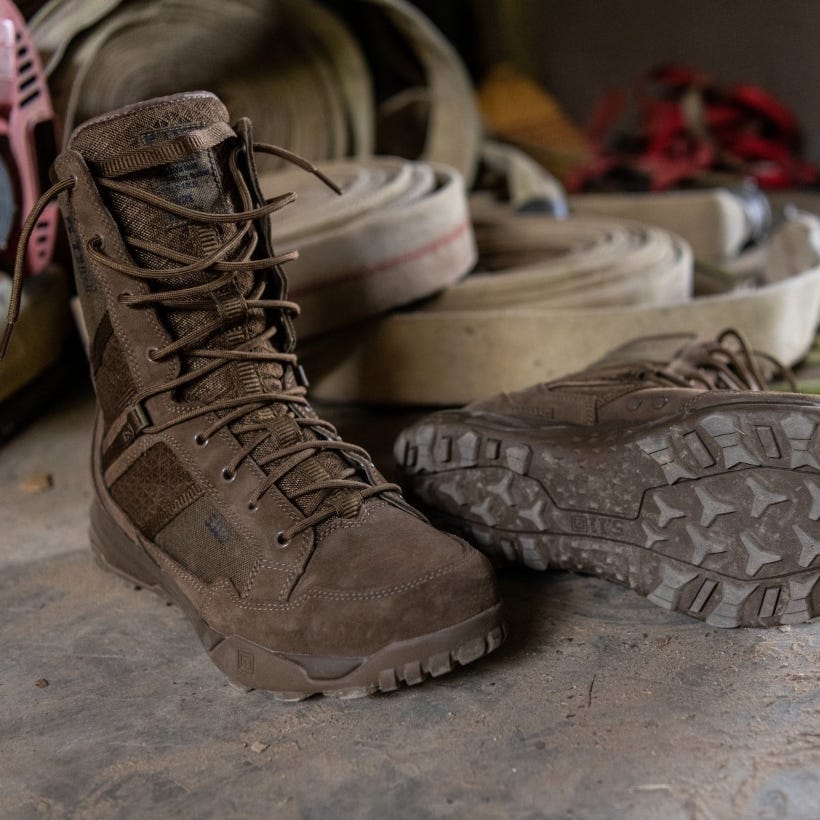
A heavy-duty 6-inch work boot combining a Carbon-Tac safety toe, industrial-grade full-grain leather, reinforced toe protection and supportive cushioning. A strong option for customers seeking a traditional leather work-boot design.
Shop Crew CST
Choosing the right safety boots starts with understanding the hazards, conditions and footwear requirements of your workplace. Explore 5.11 composite safety-toe boots designed for demanding work, long shifts and active professional use, including waterproof, puncture-resistant, side-zip and heavy-duty leather options.
The 5.11 Australia safety boot range includes three distinct options. Compare their construction, height, weather protection and intended use to help identify the most suitable boot for your working environment.
A heavy-duty 6-inch work boot combining a Carbon-Tac safety toe, industrial-grade full-grain leather, reinforced toe protection and supportive cushioning. A strong option for customers seeking a traditional leather work-boot design.
Shop Crew CSTAn 8-inch side-zip safety boot featuring a Carbon-Tac protective toe, puncture-resistant board, waterproof SlipStream membrane and supportive Ortholite cushioning. The taller design provides additional ankle and lower-leg coverage.
Shop 8" ShieldA lower-profile 6-inch safety boot with a Carbon-Tac protective toe, puncture-resistant midsole board, waterproof SlipStream membrane and a YKK side zip. It balances workplace protection with greater ease of movement.
Shop 6" ShieldComposite safety toes are made from non-metallic protective materials. They are designed to provide impact and compression protection while generally remaining lighter than traditional steel-toe construction. This can make them suitable for active roles and long periods spent on your feet.
Composite protective toes can reduce unnecessary weight compared with heavier metal alternatives, helping support comfort during long and active shifts.
Composite safety toes do not rely on steel construction. This may be useful in selected workplaces where metal-free footwear is preferred.
Safety-toe construction is designed to help protect the front of the foot against specified impact and compression hazards. Certification differs between individual products.
Reduced toe weight, supportive footbeds and considered internal construction can help improve comfort during extended periods of standing, walking and active work.
Safety footwear can include several different protective and comfort features. The correct combination depends on the hazards present in your workplace and the footwear requirements set by your employer.
A reinforced toe area is designed to protect against specified impact and compression hazards. Check the individual product page for the exact safety-toe construction and certification.
Selected Shield boots include a puncture-resistant board designed to provide added protection through the underside of the boot.
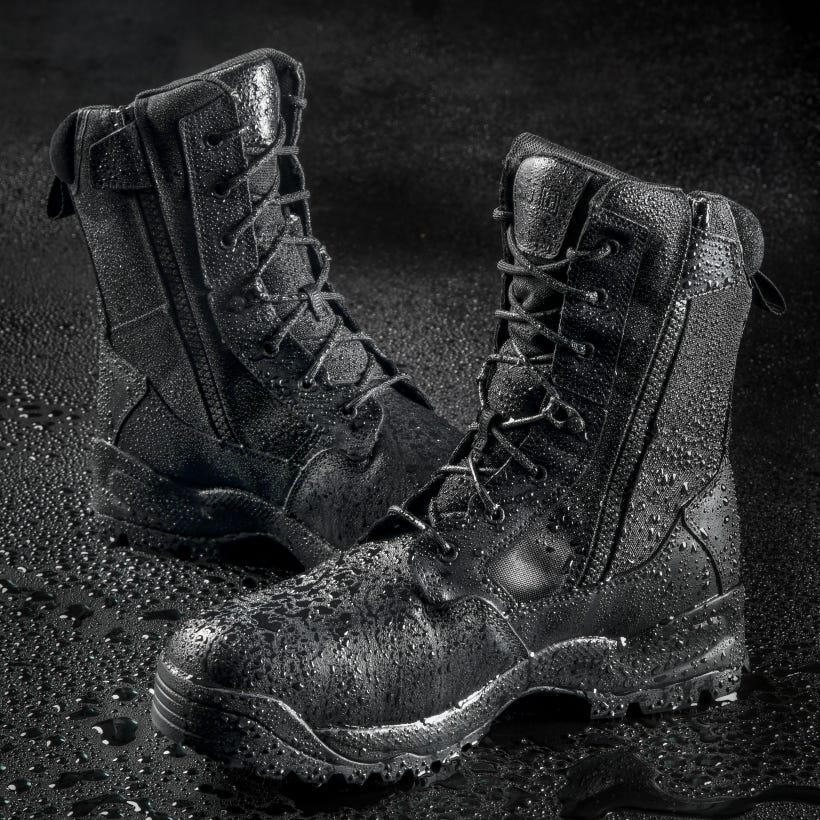
The A.T.A.C. Shield styles include waterproof construction intended for rain, wet ground and changing outdoor conditions.
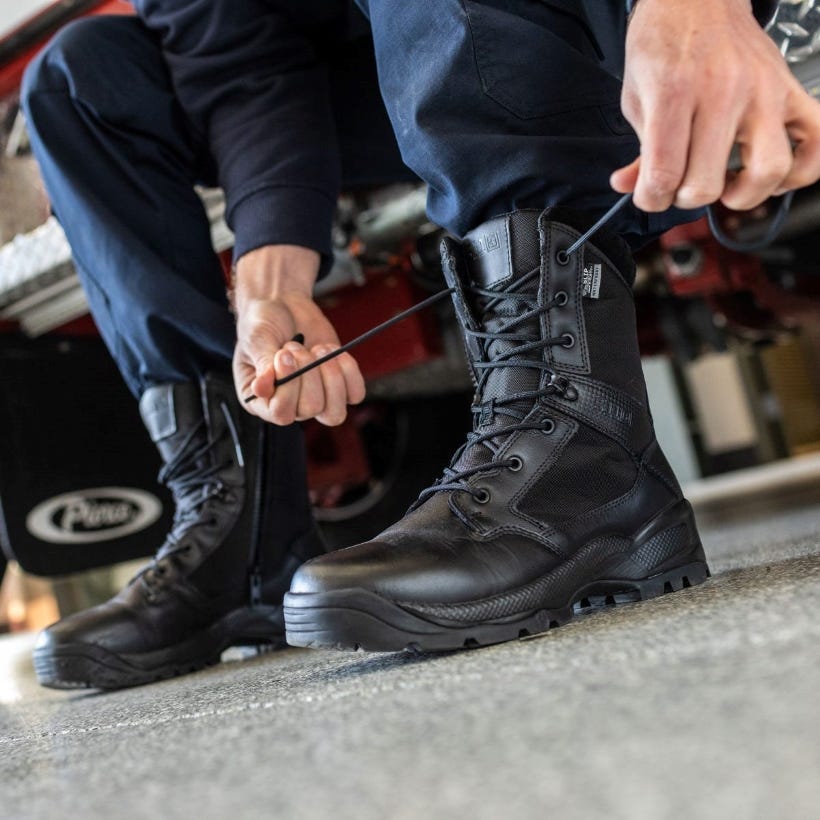
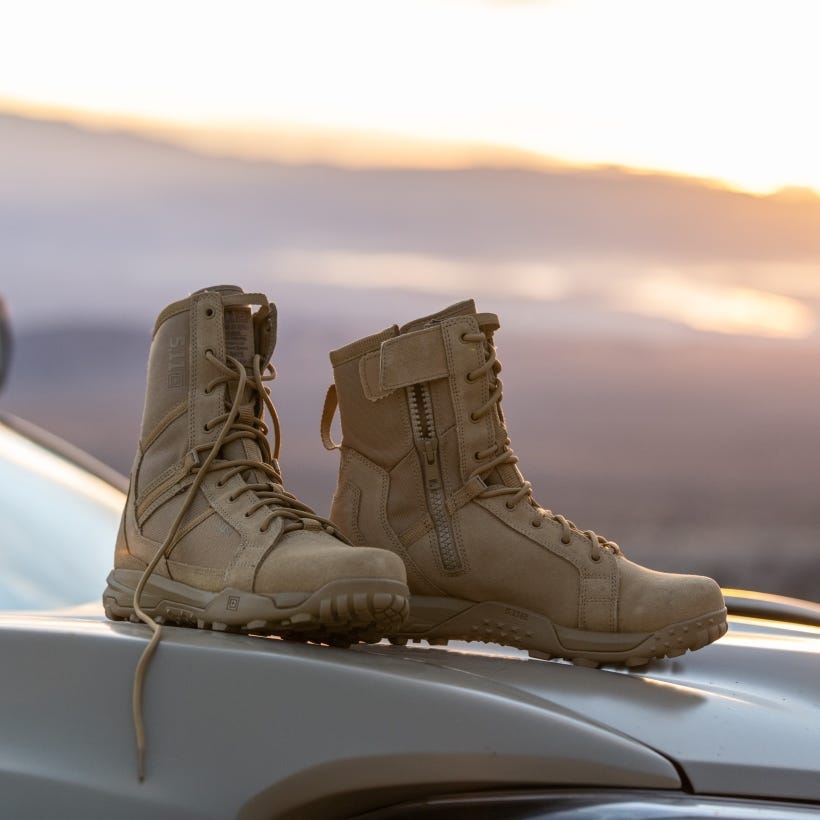
Side zips make boots easier to put on and remove while the laces allow the wearer to adjust and secure the fit.
Selected styles use Ortholite footbeds and ankle cushioning to improve underfoot comfort, heel hold and support during long shifts.
Full-grain leather, abrasion-resistant textiles and reinforced high-wear zones help the boots withstand regular professional use.
Boot height affects mobility, coverage and how the footwear feels throughout the day. The best option depends on your work environment, uniform requirements, preferred level of ankle coverage and personal comfort.
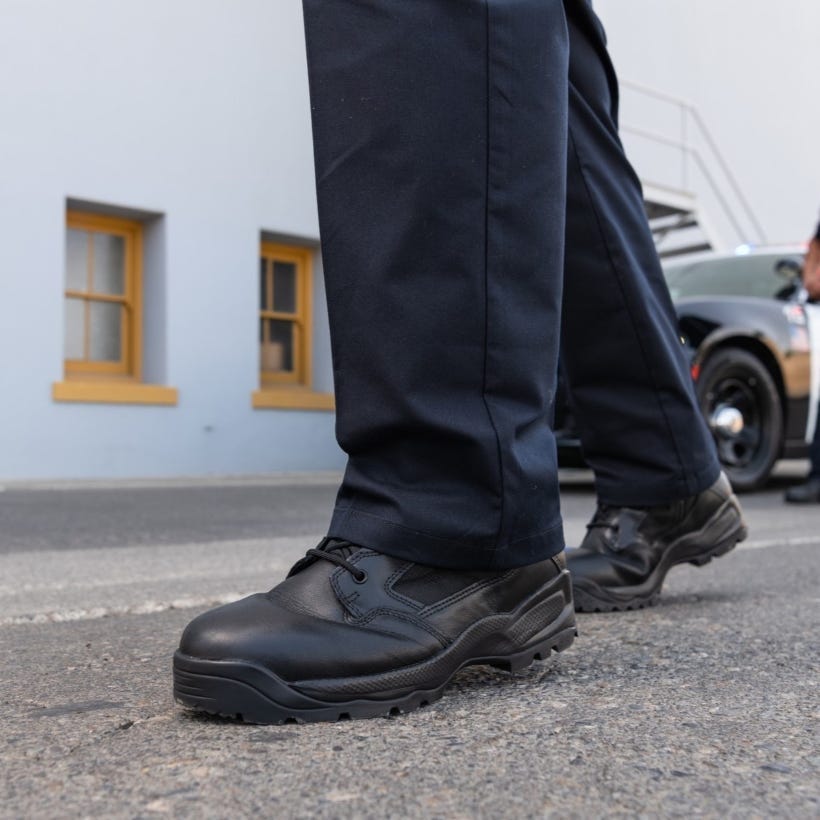
A 6-inch safety boot provides a lower profile and can offer greater freedom of movement. It may suit warehouse, transport, facilities and active roles where mobility is a priority.
An 8-inch safety boot provides additional ankle and lower-leg coverage. It may suit duty, response and outdoor roles where taller footwear is preferred.
Never select safety footwear based on the product name alone. Start by confirming the hazards and footwear standards relevant to your job, then compare fit, weather protection, boot height, weight and comfort.
Ask your employer whether your role requires a specific Australian or New Zealand standard, protective toe rating, puncture protection, electrical protection or outsole property.
Consider whether you work indoors, outdoors, around water, on hard floors, over uneven terrain or in areas exposed to specific workplace hazards.
For long shifts, prioritise supportive cushioning, secure heel hold, suitable toe room and a weight that remains manageable throughout the working day.
Select a 6-inch design for a lower profile and greater mobility, or an 8-inch design when additional ankle and lower-leg coverage is preferred.
Waterproof boots can be valuable in wet environments but may feel warmer than more breathable footwear in hot, dry or indoor conditions.
Review the exact certification shown on each product page and confirm its suitability with your employer before using the boots in a regulated workplace.
Composite toe safety boots use non-metallic materials to provide specified impact and compression protection. They are generally lighter than traditional steel-toe boots, although exact construction and certification vary by product.
Composite protective toes are generally lighter than steel-toe construction. Total boot weight also depends on the leather, outsole, waterproofing, boot height and other protective features.
The A.T.A.C. 2.0 Shield safety boots include waterproof construction. Waterproof features differ between styles, so check the individual product description before purchasing.
The A.T.A.C. 2.0 Shield boots include puncture-resistant protection. Check the exact product page for its current listed construction, certification and suitability.
Side-zip safety boots can be practical for workers who regularly put on and remove their footwear. The laces secure and adjust the fit, while the side zip allows easier daily entry.
A 6-inch safety boot generally offers a lower profile and greater ease of movement. An 8-inch safety boot provides additional ankle and lower-leg coverage.
Safety boots should hold the heel securely without excessive movement while leaving enough room around the toes. They should be tested with the socks normally worn at work and should not create painful pressure points.
Product certifications differ between styles and may reference overseas standards. Check the certification shown on the individual product page and confirm with your employer whether it satisfies the requirements of your Australian workplace.
For long shifts, consider boot weight, cushioning, heel support, toe room, breathability and the surfaces you work on. The best option must also provide the protection required for your role.
Product features and certifications differ between styles. Check each product page for current Australian availability, sizing, protective features and listed standards. Confirm workplace suitability with your employer before purchasing.