How to Choose the Best Holster Material
Holster Materials Explained: Polymer vs Leather vs Nylon
The material used in a holster affects its structure, weight, durability, maintenance and how adaptable the finished product can be.
Polymer, leather and nylon are three common holster materials, but there is no single material that is automatically best. The better choice depends on the equipment, mounting platform, retention system and professional requirements of the user.
For Australian professional users, approved equipment, organisational policy, applicable law and formal training should always take priority over material preference alone.
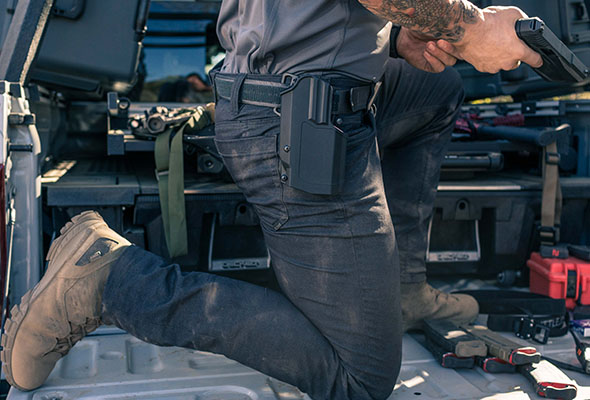
Quick answer: Polymer holsters generally provide a rigid, shape-retaining platform. Leather offers a traditional construction that can gradually conform with use. Nylon holsters can provide lower weight, flexible adjustment and compatibility with modular equipment systems. Retention and security depend on the complete holster design rather than the material alone.
What Materials Are Holsters Made From?
Common holster materials include:
- Thermoplastic and moulded polymer
- Leather
- Nylon and other technical textiles
- Hybrid combinations using more than one material
Each material influences how the holster is manufactured and how it behaves during use.
| Material | Main Characteristic | Typical Strength |
| Polymer | Rigid and shape-retaining | Precise equipment fit and structural consistency |
| Leather | Firm but capable of gradually conforming | Traditional construction and body comfort |
| Nylon | Flexible textile construction | Low weight, adjustment and modular compatibility |
| Hybrid | Combines multiple materials | Can balance structure, comfort and mounting requirements |
Polymer Holsters
Polymer holsters use a rigid synthetic material formed around specific dimensions.
Kydex® is one well-known thermoplastic brand, but not every moulded polymer holster is made from Kydex.
Common characteristics of polymer construction include:
- Rigid shape
- Low water absorption
- Relatively simple surface cleaning
- Precise manufacturing tolerances
- Compatibility with mechanical retention systems
- Model-specific construction on many products
Advantages of Polymer Holsters
Rigid construction can provide several advantages.
Consistent Shape
A moulded polymer holster generally maintains its basic structure when the equipment is removed.
This can make the fit more predictable over repeated use.
Precise Equipment Compatibility
Many polymer holsters are moulded around specific equipment dimensions rather than relying on broad adjustment.
This can provide a close, repeatable fit when the holster and equipment are correctly matched.
Moisture Resistance
Thermoplastics do not absorb moisture in the same way as natural leather.
That can simplify care in wet or humid environments, although hardware and other components may still require maintenance.
Easy Surface Cleaning
Routine dirt can often be removed relatively easily from a smooth polymer surface according to the manufacturer's care instructions.
Potential Trade-Offs of Polymer Holsters
Rigid construction also creates trade-offs.
- Less ability to conform naturally around the body
- Compatibility may be limited to specific equipment
- Rigid edges can create pressure depending on mounting position
- Surface contact can contribute to cosmetic wear on compatible equipment over time
Do not heat or reshape a moulded holster unless the manufacturer expressly instructs you to do so. Altering a holster can affect equipment fit, retention and product integrity.
Leather Holsters
Leather has been used for holster construction for generations because it combines structure with a degree of flexibility.
Unlike moulded polymer, leather can gradually change shape as it is used and exposed to moisture, pressure and movement.
Common characteristics include:
- Traditional appearance
- Firm but less rigid construction
- Ability to gradually conform
- Greater maintenance requirements than many synthetic materials
- Variation depending on leather thickness and treatment
Advantages of Leather Holsters
Comfort
Leather can gradually conform to the user and equipment, which some users find comfortable during prolonged wear.
Traditional Appearance
Leather can integrate well with professional uniforms or lower-profile clothing where a textile or highly technical appearance is not preferred.
Durability
Quality leather can provide long service life when maintained correctly.
Potential Trade-Offs of Leather Holsters
Leather is a natural material and needs more maintenance than many synthetic alternatives.
Potential considerations include:
- Moisture absorption
- Gradual shape changes
- Need for periodic inspection
- Potential drying, cracking or deformation if poorly maintained
- Longer drying time than many synthetic materials
Any leather holster used for professional equipment should be inspected regularly to ensure it continues to retain its intended structure and function.
Nylon Holsters
Nylon holsters use technical textile construction rather than a fully rigid shell.
The category can include everything from simple padded pouches to reinforced professional MOLLE-compatible systems.
Common nylon-holster features can include:
- High-denier nylon
- Hook-and-loop adjustment
- Retention straps
- Internal stiffeners
- MOLLE compatibility
- SlickStick® compatibility
- Adjustable equipment dimensions
Advantages of Nylon Holsters
Adjustability
Textile construction can allow a holster to accommodate a broader range of compatible dimensions than a rigid model-specific shell.
Low Weight
Nylon systems can provide durable construction without the weight of heavier materials or hardware.
Modularity
Nylon is particularly useful in MOLLE and load-bearing systems because webbing, straps and hook-and-loop components can be integrated directly into the construction.
Equipment Integration
Textile holsters can be designed to work directly with bags, plate carriers, tactical vests and other modular equipment.
Potential Trade-Offs of Nylon Holsters
Flexible construction means the product's structure depends heavily on how it is designed.
Consider:
- Whether the holster includes internal reinforcement
- How retention is achieved
- Whether adjustment can be secured consistently
- Material thickness
- Mounting-platform compatibility
Nylon does not automatically mean less secure. Retention depends on the complete design, including straps, hook-and-loop systems, internal reinforcement and mounting configuration.
5.11 Nylon Holster Examples
5.11's current Australian holster products demonstrate how technical textiles can be used to build adjustable and modular equipment systems.
5.11 Holster Pouch
The current 5.11 Holster Pouch uses heavy-duty nylon with adjustable locking straps and the proprietary TacTec® system.
Its dimensions can be adjusted around compatible equipment, and it attaches to loop panels built into selected 5.11 apparel and bags.
LBE Compact Holster
The 5.11 LBE Compact Holster uses 1050D nylon and is MOLLE / 5.11 SlickStick® compatible.
It also uses an adjustable hook-and-loop reducer strap, illustrating how nylon construction can provide a configurable alternative to a rigid model-specific shell.
The product remains listed on the Australian website but is currently out of stock.
Polymer vs Leather vs Nylon Holsters
| Feature | Polymer | Leather | Nylon |
| Structure | High | Moderate to high | Depends on reinforcement |
| Adjustability | Usually limited around the equipment body | Can gradually conform | Can provide substantial adjustment |
| Moisture Absorption | Low | Higher | Material-dependent but generally lower than leather |
| Maintenance | Generally low | Higher | Generally straightforward |
| Model-Specific Fit | Common | Common | Often more adaptable |
| MOLLE Integration | Usually requires additional mounting hardware | Less common | Very common |
Which Holster Material Is Most Durable?
There is no useful answer based on material alone.
Durability depends on:
- Material quality
- Thickness
- Construction
- Stitching or hardware
- Environmental exposure
- Maintenance
- How heavily the equipment is used
A well-constructed nylon holster can outperform a poorly manufactured polymer or leather product, and vice versa.
Which Holster Material Is Best in Wet Conditions?
Synthetic materials generally manage moisture differently from leather.
Polymer itself absorbs very little water, while nylon can dry relatively quickly depending on the construction. Leather requires more careful drying and maintenance after exposure to moisture.
However, the complete holster may also include:
- Metal hardware
- Foam
- Hook-and-loop material
- Stitching
- Adhesives
Always consider the finished product rather than just the primary material.
Which Holster Material Is Best for Australian Conditions?
Australian users can encounter hot, humid, dusty, coastal and wet environments, all of which create different equipment-care requirements.
| Condition | Consider |
| Hot / Humid | Moisture management, comfort and corrosion around hardware |
| Coastal | Salt exposure, hardware corrosion and regular cleaning |
| Dusty | Easy cleaning and keeping retention components free from debris |
| Wet | Drying time and how the material behaves after moisture exposure |
| Professional Daily Use | Durability, retention consistency and ease of inspection |
Which Material Is Best for MOLLE Equipment?
Nylon and other technical textiles are particularly common in MOLLE systems because webbing and attachment interfaces can be built directly into the product.
The current AU 5.11 Load Bearing Equipment range includes the Thigh Rig, Combat Belt, LBE Tactical Vest and TacTec® Plate Carrier as modular equipment platforms.
Holster Material vs Mounting System
Material and mounting system are separate decisions.
A polymer holster can mount to a belt or duty platform. A nylon holster can attach to MOLLE, hook-and-loop panels or another system. Leather can use belt loops or other traditional mounts.
Think about the system in this order: equipment compatibility → retention → mounting platform → material and comfort.
For help with the mounting decision itself, see our guides to choosing the right holster system and IWB vs OWB holsters.
How Does Holster Material Affect Retention?
Material influences what type of retention system can be built into the holster, but it does not determine retention on its own.
Examples include:
- Polymer shells using friction or mechanical devices
- Leather using moulded fit, straps or additional retention hardware
- Nylon systems using adjustable straps, hook-and-loop or reinforced structures
The appropriate system depends on the product and professional requirements.
How to Care for Different Holster Materials
Polymer
Remove dirt according to the manufacturer's instructions and inspect mounting hardware and retention components periodically.
Leather
Keep leather clean and allow it to dry naturally after moisture exposure. Use only care products appropriate to the specific leather and manufacturer instructions.
Nylon
Brush or wipe away dirt and allow textile systems to dry completely before storage. Check stitching, straps and hook-and-loop areas for wear.
Common Holster Material Buying Mistakes
Choosing Material Before Compatibility
The product must fit the compatible equipment and mounting platform before material preference matters.
Assuming Polymer Is Maintenance-Free
The shell itself may require little maintenance, but hardware, retention mechanisms and mounting components still need inspection.
Assuming Leather Automatically Improves With Age
Leather can conform with use, but excessive deformation or wear can eventually affect function.
Assuming Nylon Means Low Quality
Technical nylon such as 1050D can be used in highly durable professional equipment. Construction matters more than the word “nylon.”
Assuming Material Determines Retention
Retention comes from the complete design, not simply whether the holster is polymer, leather or textile.
Modifying a Moulded Holster Yourself
Heating, reshaping or otherwise modifying a product can affect fit and retention. Follow manufacturer instructions instead.
Frequently Asked Questions About Holster Materials
What is the best holster material?
There is no universally best material. Polymer offers rigid structure, leather provides traditional conforming construction and nylon provides low weight and modular adjustability. Choose according to compatibility, retention and intended use.
Is Kydex the same as polymer?
Kydex® is a specific thermoplastic brand. Many rigid holsters use polymer materials, but not every polymer holster is made from Kydex.
Are nylon holsters durable?
They can be. Durability depends on denier, reinforcement, stitching, retention components and overall construction. Current 5.11 professional holster products use heavy-duty and 1050D nylon.
Is leather better than polymer?
Neither is universally better. Leather and polymer offer different balances of comfort, structure, maintenance and equipment fit.
Does polymer damage equipment finishes?
Repeated contact between any holster and compatible equipment can contribute to cosmetic wear. The amount depends on fit, materials, debris and use.
Does leather need to be broken in?
Some leather products can gradually conform during normal use, but users should follow the manufacturer's instructions rather than deliberately forcing or modifying the holster.
Are nylon holsters less secure?
Not automatically. Security and retention depend on the complete design. Nylon systems can use stiffeners, locking straps, hook-and-loop adjustment and other retention methods.
What holster material is best for MOLLE?
Nylon is particularly common because MOLLE webbing and compatible attachment systems can be integrated directly into textile equipment.
Choose the Holster Material After Choosing the System
Material should not be the first question when selecting professional equipment.
Start with compatibility and retention. Then decide how the equipment needs to mount and interact with the rest of the load-bearing system.
Once those requirements are established, compare polymer, leather and nylon according to structure, comfort, maintenance, environmental conditions and modularity.
For Australian professional users, approved equipment, applicable law, organisational policy and formal training should remain the final authority.
Explore current 5.11 Tactical Gear, see the 5.11 Holster Pouch, compare 5.11 Tactical Belts, or browse current 5.11 Load Bearing Equipment.