How to Work Out With a Plate Carrier or Weight Vest
Adding weight to bodyweight training can increase the demands of familiar movements, but the extra load needs to stay secure and should be introduced gradually.
You can train with a compatible plate carrier such as the 5.11 TacTec® Plate Carrier, but if your goal is purely fitness, a purpose-built training vest such as the TacTec® Trainer Weight Vest can provide a more streamlined setup.
Quick answer: Start with movements you can already perform confidently without additional load. Fit the carrier or weight vest securely, use compatible fitness plates, begin with manageable resistance and increase the load gradually. For fitness-only use, a dedicated training vest may be more practical than a full tactical plate carrier.
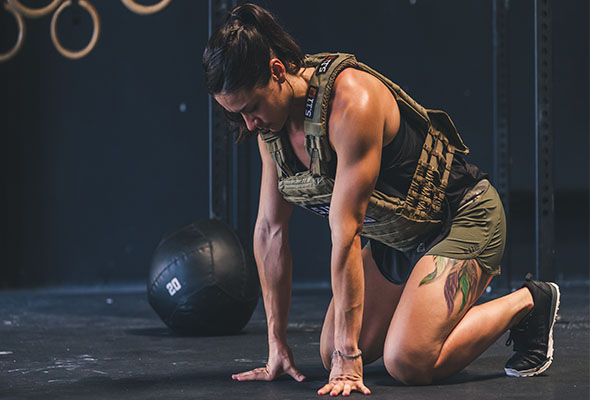
Plate Carrier vs Weight Vest for Training
The first decision is whether you actually need a tactical plate carrier or whether a dedicated training vest better suits the workout.
| Feature | Plate Carrier | Training Weight Vest |
| Primary Purpose | Tactical / professional carrier that can also support compatible fitness plates | Purpose-built weighted training |
| Fitness Use | Suitable when training with a carrier-style platform is part of the goal | Designed specifically around exercise and resistance training |
| Modularity | Extensive MOLLE and equipment compatibility depending on the carrier | More streamlined, with selected attachment capability |
| Construction | Built around tactical durability and load-bearing requirements | Built around movement, ventilation and weighted exercise |
| Best Starting Point | Users who specifically want a plate-carrier training platform | Users whose main objective is fitness |
Why Choose the TacTec Trainer Weight Vest?
If you're buying equipment specifically for weighted workouts, the TacTec® Trainer Weight Vest deserves consideration before automatically choosing a tactical carrier.
Unlike a general-purpose plate carrier, the Trainer Vest is specifically designed around fitness.
Current features include:
- Durable 600D polyester construction
- Adjustable yoke shoulder straps
- Breathable mesh shoulder padding
- Breathable mesh body pads
- Adjustable stretch cummerbund
- Compatibility with 5.11® and Rogue® weight plates
- Compatibility with the TacTec® Weight Plate Sandbag
- Front admin pockets
- Laser-cut and web MOLLE attachment areas
The adjustable stretch cummerbund helps keep the vest close to the body during movement, while the breathable padding addresses one of the most noticeable challenges of weighted training: heat building between the vest and torso. :contentReference[oaicite:1]{index=1}
Fitness-first recommendation: If you only want additional resistance for workouts, start by comparing the Trainer Weight Vest. Choose the full TacTec® Plate Carrier when training with a plate-carrier platform itself is part of what you want.
Why Train With the TacTec Plate Carrier?
The TacTec® Plate Carrier can also function as a weighted fitness platform when used with compatible training plates.
Its 500D nylon construction, padded yoke shoulder straps, perforated mesh and front and rear airflow channels provide a more tactical carrier architecture while still allowing fitness use. :contentReference[oaicite:2]{index=2}
This can make sense when:
- You specifically want to train in a plate-carrier format
- You already own a TacTec® carrier
- You value additional MOLLE capability
- You want one carrier platform with broader use beyond fitness
If none of those things matter and your objective is simply adding resistance to workouts, the Trainer Weight Vest is generally the more fitness-specific option.
Use Fitness Weight Plates, Not Protective Armour
5.11 PT-R® Weight Plates are fitness equipment. They are specifically marked as not for use in body armour.
The current PT-R® Weight Plate Pair uses curved powder-coated steel plates designed around mobility and training comfort.
Depending on plate weight, compatible setups can be used with both the TacTec® Trainer Weight Vest and TacTec® Plate Carrier. :contentReference[oaicite:3]{index=3}
For example, the current 8 kg plate pair consists of two 4 kg plates and produces an approximately 9 kg total setup when fitted to the Trainer Weight Vest. :contentReference[oaicite:4]{index=4}
How Heavy Should a Weighted Vest Be?
There isn't one ideal weight for everyone.
The appropriate load depends on:
- Your current fitness level
- The exercise
- Training duration
- Your ability to maintain good technique
- The amount of impact involved
- Your training objective
Start lighter than you think you need. The purpose of the vest is to make a good movement more demanding, not to make poor movement possible under more weight.
5.11 currently offers multiple PT-R® plate weights, giving users the ability to select resistance according to their training rather than treating one heavy setup as the default. :contentReference[oaicite:5]{index=5}
How Should a Weight Vest Fit for Exercise?
A training vest should sit close enough to the torso that the weight does not bounce excessively during movement.
It should not be so tight that normal breathing becomes difficult.
Before training:
- Install compatible fitness plates securely.
- Centre the vest on your torso.
- Adjust both shoulder straps evenly.
- Tighten the cummerbund or side adjustment until the vest is stable.
- Raise your arms and rotate your torso.
- Perform a few unweighted movement patterns while wearing the vest.
- Readjust if the load swings, rotates or creates uncomfortable pressure.
For more detail, see our guide on how a plate carrier should fit.
Best Exercises for Weighted Vest Training
Weighted vests work particularly well with exercises that already use bodyweight as resistance.
Good starting options include:
- Walking
- Step-ups
- Squats
- Lunges
- Push-ups
- Pull-ups
- Planks
- Controlled stair work
More demanding exercises can include:
- Burpees
- Thrusters
- Walking lunges
- Weighted carries
- Short conditioning circuits
Only add weight to a movement once you can perform it consistently without additional resistance.
Weighted Walking
Walking is one of the simplest ways to introduce a weighted vest because the movement is familiar and the intensity can be controlled easily.
Start with:
- A manageable load
- A shorter distance
- Flat terrain
- A comfortable pace
Increase one variable at a time rather than simultaneously adding more weight, distance and speed.
Weighted Squats and Lunges
A vest adds resistance without requiring you to hold a barbell, dumbbell or kettlebell.
This can make it useful for bodyweight-focused training, but the extra load also increases the demand on your legs and trunk.
Maintain the same controlled squat and lunge technique you would use without the vest. If additional weight causes you to lose control, reduce the load.
Weighted Push-Ups
A weighted vest can increase push-up resistance while keeping the hands free.
Make sure the plates stay securely positioned against the torso and do not shift toward the neck when you move into the horizontal position.
This is one area where good vest adjustment becomes particularly important.
Weighted Pull-Ups
Weighted pull-ups can increase upper-body pulling demand without requiring a dip belt or weight hanging between the legs.
Before adding resistance:
- Be able to perform controlled bodyweight repetitions
- Make sure the vest remains secure
- Check that shoulder straps do not interfere with your range of motion
Weighted Burpees
Burpees combine several movements and introduce more impact than walking or controlled strength exercises.
Because the body changes position quickly, poor vest fit becomes obvious.
If the vest bounces significantly during burpees, fix the fit or reduce the load before continuing.
Start with a lighter setup than you would use for walking or slower strength work.
Can You Run With a Weighted Vest?
You can use weighted vests during some running and conditioning sessions, but running introduces significantly more repeated impact than walking.
That means load progression should be conservative.
Before running with added weight:
- Be comfortable running without the vest
- Make sure the vest does not bounce
- Start with a lighter load
- Use shorter distances initially
- Maintain normal running mechanics
If adding weight causes major changes in posture, stride or control, reduce the resistance.
Can You Do HYROX or Functional Fitness Training With a Weight Vest?
Weighted vests can work well within functional fitness because they can add resistance while leaving the hands free for other movements.
They can be incorporated into:
- Bodyweight circuits
- Walking lunges
- Step-ups
- Burpees
- Push-ups
- Pull-ups
- Conditioning intervals
However, competition-specific rules differ. If you're training for an organised event, check the required equipment and weights rather than assuming your training setup matches competition standards.
How to Progress Weighted Vest Training
Progress does not need to mean adding weight every session.
You can increase difficulty by changing:
- Weight
- Repetitions
- Walking distance
- Time under load
- Exercise complexity
- Rest periods
Change one variable at a time so you can see how your body responds.
A Simple Weighted Vest Progression
| Stage | Training Focus |
| Stage 1 | Wear the vest and become comfortable walking and moving in it |
| Stage 2 | Add controlled squats, lunges, step-ups and push-ups |
| Stage 3 | Increase duration or repetitions while keeping the same load |
| Stage 4 | Add more dynamic movements such as burpees or conditioning circuits |
| Stage 5 | Increase plate weight only when technique remains consistent |
TacTec Trainer Vest vs TacTec Plate Carrier for Workouts
This is probably the most useful 5.11-specific decision for someone buying a weighted training setup.
| Feature | TacTec® Trainer Weight Vest | TacTec® Plate Carrier |
| Primary Design | Fitness | Tactical carrier with fitness capability |
| Material | 600D polyester | 500D nylon |
| Shoulders | Adjustable yoke straps with breathable mesh padding | Padded yoke shoulder straps |
| Body Ventilation | Breathable mesh body pads | Perforated mesh and padded airflow channels |
| Side Adjustment | Adjustable stretch cummerbund | Adjustable stretch waist system |
| Compatible PT-R Weight Plates | Yes | Yes |
| MOLLE | Selected laser-cut and web MOLLE | Extensive tactical MOLLE capability |
| Best For | Dedicated weighted fitness | Users specifically wanting a carrier-style platform or broader versatility |
The current TacTec® Trainer Weight Vest is priced below the full TacTec® Plate Carrier in Australia and is purpose-built around training, making it the more logical starting point for many fitness-only users. :contentReference[oaicite:6]{index=6}
Weight Vest Kits: An Easier Starting Point
5.11 Australia also offers complete weighted-training kits that combine the vest or carrier with compatible plates.
Current Training Gear listings include TacTec® Trainer Vest kits and TacTec® Weight Vest kits in multiple total-weight configurations. :contentReference[oaicite:7]{index=7}
For example, the current Trainer Vest 9 kg kit combines the dedicated TacTec® Trainer Weight Vest with an 8 kg plate pair. :contentReference[oaicite:8]{index=8}
This can simplify the buying decision because the vest and compatible training plates are selected together.
Training in Hot Australian Conditions
Weighted training creates additional heat around the torso, which becomes particularly noticeable in Australian summer conditions.
Consider:
- Session duration
- Training intensity
- Vest ventilation
- Hydration
- Outdoor temperature
- Direct sun exposure
The breathable shoulder and body padding on the TacTec® Trainer Weight Vest is particularly relevant here because the vest was designed specifically around exercise rather than simply adapting a tactical carrier for fitness. :contentReference[oaicite:9]{index=9}
Common Weighted Vest Training Mistakes
Starting Too Heavy
More weight does not automatically produce a better workout. Start with resistance you can control.
Adding Weight to Poor Technique
If you cannot perform the exercise consistently without the vest, extra resistance is unlikely to improve the movement.
Making the Vest Too Loose
A loose vest can bounce and rotate during dynamic exercises.
Making the Vest Too Tight
The setup should remain stable without unnecessarily restricting breathing.
Progressing Weight, Volume and Intensity at the Same Time
Increase one variable gradually instead of dramatically changing the entire workout.
Using Fitness Plates as Body Armour
5.11 PT-R® Weight Plates are explicitly intended for fitness use and are not protective armour. :contentReference[oaicite:10]{index=10}
Assuming a Plate Carrier Is Always Better Than a Weight Vest
If the goal is purely fitness, a dedicated training vest may provide a simpler and more appropriate platform.
Frequently Asked Questions About Plate Carrier and Weight Vest Workouts
Can you work out with a plate carrier?
Yes. Compatible plate carriers such as the 5.11 TacTec® can be used with fitness weight plates for weighted bodyweight training.
Is a plate carrier better than a weight vest?
Not automatically. A plate carrier provides a tactical carrier platform with broader modular capability, while a dedicated weight vest is designed specifically around exercise. For fitness-only use, the training vest is often the more direct choice.
What is the best 5.11 vest for workouts?
The TacTec® Trainer Weight Vest is specifically designed for fitness, using breathable padding, adjustable shoulders and a stretch cummerbund while accepting compatible 5.11 training plates. :contentReference[oaicite:11]{index=11}
How heavy should a weighted vest be?
There is no universal weight. Start with a manageable resistance that allows you to maintain normal movement and good technique, then progress gradually.
Can you run with a weighted vest?
Yes, but running adds repeated impact. Start with lighter resistance and shorter distances and make sure the vest remains stable without changing your running mechanics significantly.
Can you do burpees with a weighted vest?
Yes, provided you can already perform controlled burpees without weight and the vest remains secure during the movement.
What exercises are best with a weighted vest?
Walking, squats, lunges, step-ups, push-ups, pull-ups and controlled bodyweight circuits are useful starting points. More dynamic exercises can be added as you become comfortable with the load.
Can PT-R weight plates be used as body armour?
No. 5.11 specifically identifies PT-R® Weight Plates as fitness equipment and not for use in body armour. :contentReference[oaicite:12]{index=12}
Do the TacTec Trainer Vest and TacTec Plate Carrier use the same weight plates?
Compatible PT-R® Weight Plate pairs can be used with both systems, with the total loaded weight differing slightly because the carrier and Trainer Vest have different base weights. :contentReference[oaicite:13]{index=13}
Choose the Training Platform Around the Workout
Weighted training works best when the resistance supports the workout rather than dominating it.
Start with movements you already perform well, select a manageable training load and make sure the vest stays secure without restricting breathing or movement.
If your objective is dedicated fitness, the TacTec® Trainer Weight Vest is the natural place to start. If you specifically want to train with a tactical carrier-style platform, the TacTec® Plate Carrier provides a more modular alternative that also accepts compatible fitness plates.
Explore the TacTec® Trainer Weight Vest, compare the TacTec® Plate Carrier, browse PT-R® Weight Plates, or see the full 5.11 Training Gear range.