 YOU ARE SHOPPING ON OUR


Best Socks for Workouts, Tactical Ops and Everyday Wear
The best socks depend on what you're doing, what footwear you're wearing and how long you'll be on your feet. Training socks, duty socks and everyday socks can all prioritise different things, from moisture management and cushioning to boot height and long-shift support.
Rather than choosing socks by thickness alone, start with the activity and footwear. A low-cut trainer used in the gym has very different requirements from an 8-inch tactical boot worn through a long shift.
Quick answer: Choose socks around your activity and footwear. For training, prioritise moisture management, breathability and lower-profile cushioning. For tactical or duty use, look for a secure cuff, support through the arch, cushioning in high-pressure areas and a height that works with your boots. For everyday wear, balance comfort, moisture control and durability without adding unnecessary bulk.
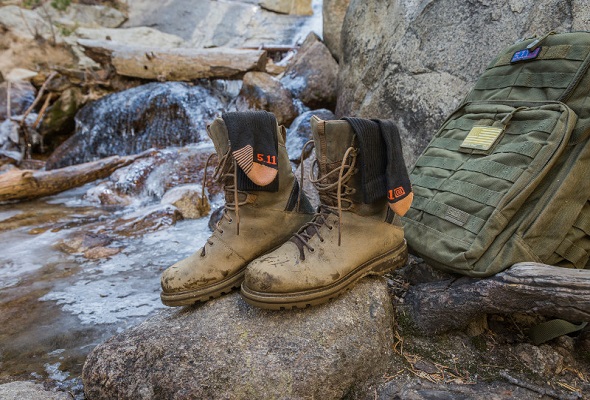
What Makes a Good Tactical or Performance Sock?
A good performance sock should help manage the interaction between your foot and your footwear.
Useful features can include:
- Moisture-wicking fibres
- Breathable knit zones
- Heel and toe cushioning
- Arch support
- A cuff designed to stay in place
- Low-friction yarns or construction
- Odour control
- A height suited to the shoe or boot
Not every sock needs every feature. The right combination depends on the activity, boot height, climate and how long you expect to wear it.
Choose Socks by Activity
| Use Case | Prioritise | Typical Sock Style |
| Training / Gym | Moisture management, breathability and movement | Ankle or low-profile training sock |
| Police / Security / Duty | Long-wear cushioning, support and a secure cuff | Crew or over-the-calf duty sock |
| 8-Inch Tactical Boots | Coverage above the boot collar and reduced rubbing | Crew or over-the-calf sock |
| 6-Inch Boots | Coverage, cushioning and moisture control | Crew sock |
| Everyday Wear | Comfort, durability and moisture control | Ankle or crew sock depending on footwear |
| Hot Conditions | Breathability and moisture management | Lighter performance construction |
Best Socks for Workouts and Training
Training generates heat, moisture and repeated movement inside the shoe, so performance socks should help manage sweat without adding unnecessary bulk.
Look for:
- Breathable construction
- Moisture-wicking fibres
- Secure heel fit
- Cushioning in high-impact areas
- A cuff that stays in place
- Appropriate arch support
5.11 example: The current Australian sock range includes PT-R™ ankle socks specifically positioned around training, alongside the ABR™ Training Sock. These lower-profile options make more sense for trainers and gym footwear than a tall duty sock.
Browse the 5.11 Tactical Socks range to compare the current training and duty options available in Australia.
Best Socks for Tactical and Duty Boots
Tactical or duty footwear changes the sock requirement because the boot covers more of the foot and lower leg and may be worn for many hours at a time.
For long shifts, useful features include:
- Heel and toe cushioning
- Arch support
- A cuff that resists sliding down
- Moisture management
- Breathable knit zones
- Reduced friction
- Appropriate height for the boot
Current 5.11 Duty Ready socks are built around these requirements rather than simply adding more thickness.
Duty Ready Ultra vs Duty Ready Plus Socks
The current AU Duty Ready range provides a useful example of how sock construction can be matched to different levels of cushioning and coverage.
| Feature | Duty Ready Ultra Crew | Duty Ready Plus OTC |
| Height | Crew | Over the calf |
| Cushioning | Ultra-level heel and toe cushioning | Plus-level heel, toe and forefoot cushioning |
| Support | Ultra arch support | Arch support with breathable construction |
| Upper | NO QUIT cuff | NO QUIT cuff |
| Moisture / Odour | Moisture and odour control | Moisture-wicking and odour control |
| Best Starting Point | Users wanting higher cushioning in a crew-height duty sock | Users wanting over-the-calf coverage for taller boots |
The Duty Ready Ultra Crew Socks use 5.11 SlipStream™ low-friction yarns alongside breathable mesh knitting, zonal cushioning and enhanced arch support. :contentReference[oaicite:1]{index=1}
The Duty Ready Plus OTC Socks extend coverage over the calf while adding heel, toe and forefoot cushioning, breathable arch support and moisture management. :contentReference[oaicite:2]{index=2}
Crew Socks vs Over-the-Calf Socks
Sock height should match the footwear and how much lower-leg coverage you want.
| Sock Height | Best Suited To | Main Advantage |
| Ankle | Training shoes and low-cut footwear | Low profile and less material around the lower leg |
| Crew | 6-inch boots, work footwear and everyday use | Good balance of coverage and versatility |
| Over the Calf | 8-inch boots and users wanting maximum sock coverage | Extends above more of the boot shaft and helps reduce direct boot-to-skin contact |
The current AU Socks category includes ankle, crew and over-the-calf options, so the best height should be chosen around the footwear rather than the activity name alone. :contentReference[oaicite:3]{index=3}
What Socks Are Best With 6-Inch Tactical Boots?
A crew sock is usually a practical starting point for a 6-inch boot because it provides enough coverage to sit above much of the boot collar without extending as high as an over-the-calf option.
Prioritise:
- A secure cuff
- Heel and toe cushioning
- Moisture management
- Arch support
- A fit that does not bunch inside the boot
What Socks Are Best With 8-Inch Tactical Boots?
Taller boots create more contact around the lower leg, so additional sock height can be useful.
For 8-inch tactical boots, crew or over-the-calf socks are generally the most practical starting points. Choose the height that extends comfortably above the areas where the boot could otherwise rub against the leg.
Over-the-calf socks such as the current Duty Ready Plus OTC are designed specifically for greater lower-leg coverage while retaining cushioning and moisture management.
How Much Cushioning Do You Need?
More cushioning is not automatically better.
The ideal amount depends on your footwear fit, workload and personal preference.
Additional cushioning can help around the heel, toe and forefoot during prolonged standing and walking, but excessively thick socks can make correctly sized footwear feel too tight.
Consider the complete system:
- Boot or shoe fit
- Footbed cushioning
- Midsole cushioning
- Sock thickness
- Amount of standing and walking
- Equipment load
Why Moisture Management Matters
Feet generate moisture throughout the day, particularly during training, warm weather and long shifts.
A performance sock should help move moisture away from the skin and allow the footwear system to manage heat more effectively.
This can also help reduce the combination of moisture and friction that contributes to discomfort during extended wear.
The current 5.11 Duty Ready range incorporates moisture management alongside breathable knit zones rather than relying on cushioning alone. :contentReference[oaicite:4]{index=4}
What Does Low-Friction Sock Construction Do?
Friction occurs when the foot, sock and inside of the footwear move against one another.
A secure footwear fit is the first priority, but sock construction can also help manage this contact.
The Duty Ready Ultra Crew uses proprietary 5.11 SlipStream™ yarns specifically designed to reduce friction while maintaining cushioning, arch support and moisture management. :contentReference[oaicite:5]{index=5}
This is a useful example of why the best tactical sock isn't necessarily the thickest one. Material and construction matter too.
What Socks Are Best for Hot Australian Conditions?
Australian conditions make moisture and heat management particularly important.
In warm environments, prioritise:
- Breathable knit construction
- Moisture-wicking fibres
- A thickness appropriate to the footwear
- A secure fit that doesn't bunch
- Enough cushioning for the workload without excessive bulk
If you're wearing hot-weather tactical boots, pairing them with an unnecessarily heavy sock can work against the breathability you're trying to gain from the footwear.
What Socks Are Best for Long Shifts?
Long shifts place more emphasis on consistent fit, cushioning and support.
A sock that feels comfortable for ten minutes can behave differently after hours of walking and standing.
For prolonged duty wear, consider:
- Heel and toe cushioning
- Arch support
- A cuff that stays in place
- Moisture control
- Reduced friction
- Appropriate coverage for the boot
The Duty Ready Ultra Crew is currently described by 5.11 as its most performance-oriented professional-grade sock, using SlipStream™ yarns, breathable mesh knitting, zonal cushioning and high-level arch support for extended wear. :contentReference[oaicite:6]{index=6}
Are Compression Socks the Same as Tactical Socks?
Not necessarily.
Some tactical socks use compression or support zones, but a tactical or duty sock is generally designed around a broader combination of footwear compatibility, cushioning, moisture management, durability and support.
If you specifically require medical-grade compression, use products intended and sized for that purpose rather than assuming an ordinary tactical sock provides the same function.
What Socks Are Best for Everyday Wear?
For everyday wear, you may not need the same level of cushioning or coverage as a long professional shift.
Prioritise:
- Comfort
- Breathability
- Moisture management
- Durability
- Appropriate height for your footwear
A crew sock can transition easily between boots, work footwear and casual shoes, while ankle socks may make more sense with trainers and lower-profile footwear.
Choosing Sock Size
Socks should fit closely without excessive compression, loose fabric or bunching.
A sock that is too large can fold inside the boot and create friction. A sock that is too small can feel restrictive and may not sit correctly around the heel or calf.
5.11 publishes dedicated men's and women's sock sizing across S, S/M, M, L and L/XL options depending on the product. Check the current 5.11 size chart when selecting a size. :contentReference[oaicite:7]{index=7}
Common Sock Buying Mistakes
Choosing the Thickest Sock Available
Extra thickness can reduce available space inside correctly fitted footwear. Match cushioning to the boot and workload rather than assuming more is better.
Ignoring Boot Height
A low sock can leave the lower leg in direct contact with a taller boot collar. Match sock height to the footwear.
Using Cotton Thickness as the Only Measure of Comfort
Modern performance socks use combinations of fibres, mesh zones, cushioning and support. Material construction matters more than thickness alone.
Wearing the Same Sock for Every Activity
The sock that works best in a gym trainer may not be the best option inside an 8-inch tactical boot for a ten-hour shift.
Ignoring Fit
Loose fabric, bunching or excessive compression can create discomfort regardless of how advanced the sock materials are.
Frequently Asked Questions About Tactical and Performance Socks
What are the best socks for tactical boots?
Choose socks that provide appropriate boot-height coverage, moisture management, a secure cuff, cushioning and support. Crew and over-the-calf socks are common choices for tactical boots.
What socks should I wear with 8-inch boots?
Crew or over-the-calf socks generally provide the most useful coverage. Over-the-calf options can extend above more of the boot shaft and reduce direct contact between the boot and lower leg.
What socks should I wear with 6-inch boots?
Crew socks are a practical starting point because they provide coverage above the boot collar without requiring full over-the-calf height.
Are thick socks better for tactical boots?
Not automatically. Thick socks provide more cushioning but also take up more room inside the boot. Choose cushioning that works with the fit and support already provided by the footwear.
What are the best socks for long shifts?
Look for moisture management, heel and toe cushioning, arch support, a cuff that stays in place and a height appropriate to your footwear.
What socks are best for workouts?
For training, lower-profile ankle socks with breathable, moisture-managing construction usually make more sense than tall duty socks unless your footwear requires additional coverage.
Are tactical socks good for everyday wear?
Yes. Many tactical and duty socks can work well for everyday use because they combine cushioning, moisture control and durable construction. Choose the height and cushioning level around your footwear and activity.
Do tactical socks help prevent blisters?
A well-fitting sock that manages moisture, reduces bunching and limits friction can help reduce conditions that contribute to blisters. Correct footwear fit remains equally important.
Are over-the-calf socks better for tactical boots?
They can be useful with taller boots because they provide additional coverage. They are not automatically better for everyone; some users prefer crew height depending on boot construction and personal comfort.
Choose Socks Around Your Footwear and Activity
The best sock isn't simply the warmest, thickest or most technical option.
Start with the activity and the footwear. For training, prioritise breathability and moisture management. For tactical boots and long shifts, add appropriate coverage, cushioning, support and a secure cuff. For everyday wear, balance comfort and durability without unnecessary bulk.
Explore the current 5.11 Tactical Socks range, browse the broader 5.11 Footwear range, or compare 5.11 Tactical Boots to build a footwear system suited to your work, training or everyday needs.