 YOU ARE SHOPPING ON OUR


How to Break In Tactical Boots
New tactical boots should feel secure from the start, but some materials and support systems can soften and adapt slightly as you wear them. The safest way to break in tactical boots is gradually — not by soaking them, overheating them or trying to force the materials to change shape.
A proper break-in period should help the boot settle around your foot without creating blisters, painful pressure points or unnecessary damage to the footwear.
Quick answer: Break in tactical boots gradually. Wear them indoors or for short periods first, use the socks you normally plan to wear, adjust the lacing carefully and increase wear time over several days. Do not soak tactical boots in water to speed up the process, especially if they contain waterproof membranes, adhesives, suede, mesh or mixed-material uppers.
Do Tactical Boots Need to Be Broken In?
Sometimes, but not in the way people often imagine.
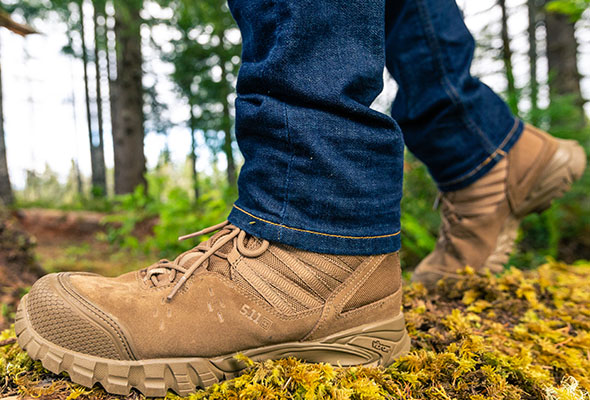
Modern tactical boots use combinations of leather, suede, nylon, mesh, foam cushioning and structured support systems. These materials can soften or settle slightly with wear, but the boot should already fit reasonably well when you first try it on.
Important: Breaking in a boot can help materials adapt slightly to your foot. It cannot correct a boot that is fundamentally the wrong size, too narrow, too wide or poorly matched to your foot shape.
If you need extreme lace tension, your toes are compressed or your heel is moving excessively from the first wear, reassess the fit before assuming the problem will disappear with time.
How Long Does It Take to Break In Tactical Boots?
There is no universal break-in period.
Some modern tactical boots may feel comfortable almost immediately, while firmer leather or more structured models can take several wears before they feel fully settled.
The time required depends on:
- Upper materials
- Boot height
- Midsole and support construction
- Your foot shape
- How long you wear the boots at a time
- The socks you use
- How demanding the activity is
The objective shouldn't be to break the boots in as quickly as possible. It should be to increase wear gradually without creating foot problems or damaging the footwear.
How to Break In Tactical Boots Safely
Step 1: Start With the Right Size
Before beginning any break-in process, make sure the boots fit correctly.
Your heel should feel secure, your toes should have appropriate room and the boot should not create severe pressure points when correctly laced.
Try the boots with the same type of socks you expect to wear for work, training or outdoor use.
Step 2: Wear Them Indoors First
Start by wearing the boots around the house or another clean indoor environment for short periods.
This gives you an opportunity to identify pressure points without committing to a long shift, hike or training session.
Pay attention to:
- Heel movement
- Toe pressure
- Pressure across the top of the foot
- Rubbing around the ankle
- How the boot flexes when walking
Step 3: Adjust the Lacing
Lacing can make a significant difference to how a tactical boot feels.
Rather than pulling every section as tightly as possible, adjust tension so the heel is held securely while avoiding unnecessary pressure across the top of the foot.
If you need help changing your setup, see our guide on How to Lace Tactical Boots.
Step 4: Increase Wear Time Gradually
Once the boots feel comfortable indoors, start wearing them for short periods outside.
A practical progression might look like:
| Stage | Suggested Use |
| First Wear | Short indoor wear to check fit and pressure points |
| Next Few Wears | Short walks or light everyday use |
| Intermediate | Longer periods of walking and standing |
| Fully Comfortable | Long shifts, training, outdoor use or more demanding activity |
You don't need to follow an exact timetable. If the boots remain comfortable, progress. If you develop persistent rubbing or pain, reduce wear time and reassess the fit.
Step 5: Use Appropriate Socks
Socks affect both comfort and how the boot fits.
Use socks that provide appropriate cushioning and moisture management for the environment you'll actually be working or training in.
Very thick socks can make an already snug boot too tight, while very thin socks can increase movement inside a boot that is slightly roomy.
Step 6: Let the Boots Recover Between Wears
If the boots become damp from rain or perspiration, allow them to air dry before the next long wear.
This is particularly important during the early break-in period when you're still assessing how the boot fits and performs.
Why You Shouldn't Soak Tactical Boots to Break Them In
Older boot advice sometimes recommends soaking leather boots in water and wearing them until they dry.
That approach is not appropriate for many modern tactical boots.
Avoid fully soaking tactical boots to force a faster break-in. Modern boots can combine leather or suede with adhesives, foam cushioning, nylon, waterproof membranes and other technical materials that are not intended to be saturated as part of the fitting process.
Current 5.11 boots illustrate why this matters. The A/T range can combine water-resistant suede, high-abrasion air-mesh nylon, cushioning foams and structured support systems in the same boot. :contentReference[oaicite:1]{index=1}
For waterproof models, deliberately saturating the boot also makes little sense when the footwear is designed around keeping unwanted moisture out.
Can You Break In Tactical Boots Faster?
You can make the process more efficient, but there is no reason to force it.
The safest ways to speed up adaptation are:
- Wear the boots consistently for short periods
- Walk in them rather than simply sitting
- Use the socks you plan to wear regularly
- Adjust your lacing according to pressure points
- Increase activity gradually as comfort improves
Avoid shortcuts that rely on excessive heat, complete soaking or aggressive manipulation of the boot.
Should New Tactical Boots Hurt?
No.
A new boot may feel firmer or less flexible than a well-worn pair, but significant pain should not be treated as a normal part of breaking them in.
| What You Feel | What It May Mean |
| General firmness | May improve slightly as the upper and cushioning settle |
| Minor stiffness around a new upper | Can reduce with gradual wear |
| Severe toe pressure | Possible sizing or shape issue |
| Persistent heel slipping | Check fit, sizing and lacing |
| Sharp or localised pain | Stop assuming it is a normal break-in issue and reassess the fit |
| Blisters developing quickly | Check movement, socks, lacing and footwear fit before increasing wear time |
How to Reduce Heel Slip While Breaking In Boots
A small amount of movement can feel more noticeable in a new boot, but the heel should not repeatedly lift significantly with every step.
Before blaming the break-in period:
- Check that the boot is the correct size
- Make sure your heel is seated fully into the back of the boot
- Adjust the upper lacing more securely
- Use appropriate socks
- Check whether the boot's shape matches your foot
Some current 5.11 boots incorporate features specifically intended to help control fit. A/T boots, for example, can use locking ankle eyelets alongside structured support systems. :contentReference[oaicite:2]{index=2}
How to Prevent Blisters in New Tactical Boots
Blisters usually result from repeated friction, moisture and movement between the foot, sock and footwear.
During the break-in period:
- Wear appropriate moisture-managing socks
- Keep feet and socks as dry as practical
- Increase wear time gradually
- Stop and adjust the boot if you feel repeated rubbing
- Check whether heel movement is excessive
- Avoid beginning with a full-day shift or long hike if you haven't tested the boots first
The objective is to identify a rubbing point before it becomes a blister rather than trying to tough your feet through it.
Breaking In 6-Inch vs 8-Inch Tactical Boots
Boot height can influence how noticeable the early break-in period feels.
6-Inch Tactical Boots
A 6-inch tactical boot generally has less material around the lower leg and can feel less restrictive to users transitioning from conventional shoes or lower footwear.
Current 5.11 A/T 6-inch boots are designed around long-shift support and use water-resistant suede with high-abrasion air-mesh nylon alongside the A.T.L.A.S.™ support system. :contentReference[oaicite:3]{index=3}
8-Inch Tactical Boots
An 8-inch boot provides additional coverage around the ankle and lower leg, so there is more upper material to settle around the wearer.
That doesn't necessarily mean an 8-inch boot needs a dramatically longer break-in period, but it makes gradual testing particularly useful if you are not accustomed to taller footwear.
Compare current 8-inch tactical boots if greater lower-leg coverage is part of your requirement. :contentReference[oaicite:4]{index=4}
Breaking In Tactical Boots for Long Shifts
Do not make your first full wear an entire professional shift if you can avoid it.
Long periods of standing and walking can expose fit issues that aren't noticeable during the first few minutes.
Before relying on new boots at work:
- Test them indoors.
- Wear them on several short walks.
- Increase standing and walking time.
- Test them with the socks and equipment you normally use.
- Only move to a full shift once the footwear is consistently comfortable.
This matters particularly for users carrying equipment because extra weight changes the forces passing through the footwear.
5.11's current A/T footwear is specifically designed around long shifts and users carrying additional work weight through the A.T.L.A.S.™ support system. :contentReference[oaicite:5]{index=5}
Breaking In Waterproof Tactical Boots
Waterproof tactical boots should be broken in through normal wear, not by deliberately filling or soaking them with water.
The boot may include a waterproof membrane, treated leather, mesh panels, adhesives and cushioning systems that all perform different jobs.
Wear waterproof boots gradually just as you would any other modern tactical boot, and allow them to dry naturally if they become wet during use.
Explore the current 5.11 Tactical Boots range to compare waterproof and non-waterproof options available in Australia. :contentReference[oaicite:6]{index=6}
Breaking In Tactical Boots for Australian Conditions
Australia's climate makes gradual break-in especially useful because temperature and moisture can affect how footwear feels during long periods of use.
Hot Conditions
In warm weather, feet can become hotter and may swell slightly over the course of a long day.
A boot that feels extremely tight when first laced may become uncomfortable several hours later, so avoid overtightening during the early break-in period.
Wet Conditions
If you're testing new boots in wet weather, allow them to dry properly between wears.
Don't treat rain as a deliberate break-in technique.
Long Urban Shifts
Standing and walking on concrete can reveal cushioning and fit issues quickly. Build up wear time before committing to an entire shift in new boots.
Do Leather Tactical Boots Need More Breaking In?
Leather and suede can soften slightly with use, but modern tactical boots frequently combine those materials with synthetic textiles and structured cushioning systems.
That means traditional advice developed for all-leather military boots doesn't necessarily apply to modern tactical footwear.
The best approach is still gradual wear.
Can You Use Heat to Break In Tactical Boots?
It isn't recommended as a general break-in method.
Direct heat can affect leather, adhesives and other components and can dry materials unevenly.
Wear the boots and let normal movement gradually adapt the upper instead of trying to reshape the footwear with heat.
When Should You Stop Trying to Break In a Pair of Boots?
Not every discomfort should be solved through persistence.
Reassess the footwear if:
- Your toes remain compressed
- Your heel continues to move excessively
- You develop repeated blisters in the same place
- There is sharp or persistent pain
- The boot feels significantly too narrow or too wide
- You need extreme lacing tension just to keep the foot secure
Break-in should improve a good fit. It should not be used to rescue a bad fit.
Common Tactical Boot Break-In Mistakes
Soaking the Boots
Complete saturation is unnecessary and can be unsuitable for modern mixed-material tactical footwear.
Wearing Them for a Full Day Immediately
A long first wear makes it much harder to identify and correct pressure or rubbing before it becomes uncomfortable.
Assuming Pain Is Normal
Some stiffness is normal. Significant pain is not something you should simply expect to disappear.
Using Very Thick Socks to Fix a Poor Fit
Socks can fine-tune comfort, but they shouldn't be used to compensate for fundamentally incorrect sizing.
Overtightening the Laces
Excessive tension can create pressure points without solving the underlying fit problem.
Using Heat to Force the Boot to Change Shape
Direct heat can damage materials and isn't necessary for a normal break-in process.
Frequently Asked Questions About Breaking In Tactical Boots
What is the fastest way to break in tactical boots?
The safest way is consistent gradual wear. Start indoors, move to short walks and progressively increase wear time. Avoid soaking or heating the boots to force a faster result.
How many days does it take to break in tactical boots?
There is no fixed number. Some modern tactical boots feel comfortable quickly, while firmer or more structured footwear can require several wears. Fit and materials matter more than a specific number of days.
Should I soak tactical boots to break them in?
No. Modern tactical boots can contain leather, suede, nylon, foam, adhesives, waterproof membranes and structured support components. Gradual wear is a safer and more appropriate break-in method.
Should new tactical boots hurt at first?
They may feel firmer than worn-in footwear, but they should not cause significant pain. Persistent pressure, severe rubbing or excessive heel movement can indicate a fit problem.
How do you prevent blisters when breaking in boots?
Increase wear time gradually, use appropriate socks, keep your feet reasonably dry, adjust lacing and stop to address repeated rubbing before it develops into a blister.
Can you break in tactical boots by walking?
Yes. Normal walking is one of the most practical ways to allow boots to adapt gradually. Start with shorter periods and increase the distance as comfort improves.
Do 8-inch boots take longer to break in?
Not necessarily, but an 8-inch boot has more material around the ankle and lower leg, so users who aren't accustomed to taller boots may notice the upper more during early wear.
How do you break in waterproof tactical boots?
Use normal gradual wear. Do not deliberately soak waterproof boots. Test them over progressively longer periods and allow them to dry naturally between wet uses.
Can I wear new tactical boots for a full shift?
You can, but it is better to test new footwear through shorter periods first when possible. This gives you time to identify fit or rubbing issues before spending an entire shift in the boots.
Break In Tactical Boots Gradually
The best break-in method is also the simplest: make sure the boots fit properly, use the socks you normally wear, adjust the lacing and gradually increase the amount of time you spend in them.
Modern tactical boots are engineered systems made from multiple materials. There is no need to soak them, heat them or force them to change shape.
A successful break-in period should leave the boot feeling more familiar and comfortable while preserving the support, materials and construction it was designed with.
Explore the current 5.11 Tactical Boots, compare 8-inch tactical boots, or browse the wider 5.11 Footwear range to find the right footwear for your work, outdoor or duty requirements.