 YOU ARE SHOPPING ON OUR


What Are Tactical Boots Used For?
What Are Tactical Boots Used For?
Tactical boots are designed for people who need footwear to perform reliably through demanding work, long periods on their feet and changing environments. They are commonly used by law enforcement, security, emergency services, military personnel, trades and outdoor users, but the exact boot you need depends on the job rather than the word "tactical" alone.
A police officer working long shifts on hard surfaces, a security professional needing quick side-zip access, a worker requiring safety protection and someone operating in hot, dry conditions may all wear tactical boots — but they should not necessarily choose the same pair.
Quick answer: Tactical boots are used when footwear needs to combine durable construction, reliable traction, secure support and features suited to professional or demanding environments. They are commonly worn for police and security work, emergency services, military applications, outdoor use, long shifts and some worksites. The best tactical boot depends on the environment, required protection, boot height, weather and how much time you spend carrying equipment or standing and walking.
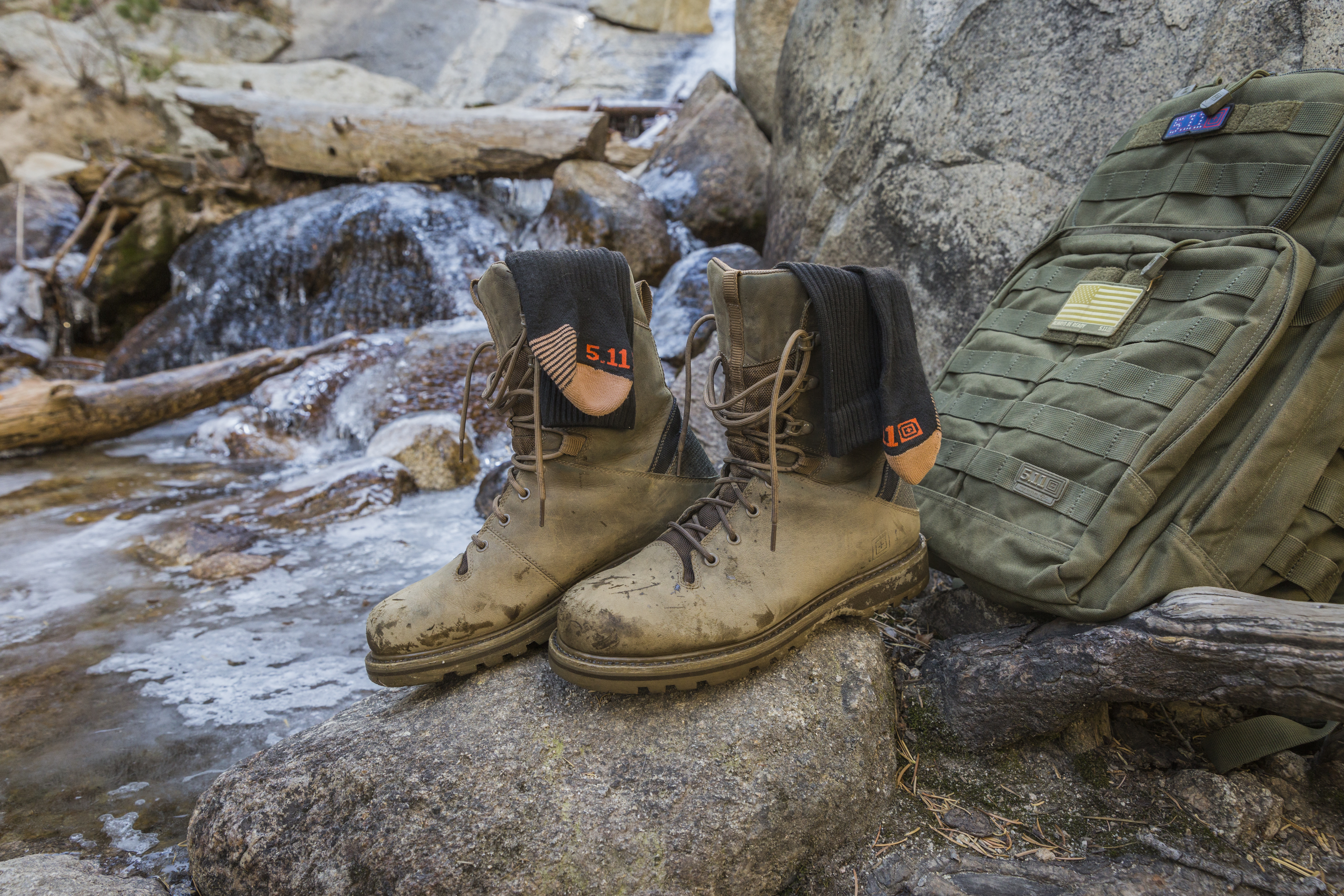
Who Uses Tactical Boots?
Tactical boots were developed around demanding professional use, but today they are used across a much broader range of jobs and activities.
| User or Activity | Why Tactical Boots Can Be Useful |
| Police and Law Enforcement | Long-shift support, traction, professional appearance and options such as side zips or polishable leather. |
| Security | Comfort during prolonged standing and walking, durable construction and quick on/off options. |
| Fire and Emergency Services | Support, traction and specialised protection depending on operational requirements. |
| Military and Defence | Durable footwear designed around movement, equipment loads and different terrain or environments. |
| Trades and Work | Long-wear comfort, traction and selected safety features where required. |
| Outdoor Use | Durability, grip and support for uneven or changing terrain. |
| Everyday Wear | Some users prefer tactical boots for their durability, support and practical features even outside professional use. |
What Makes a Boot Tactical?
There isn't one universal feature that makes a boot tactical. Instead, tactical footwear is generally designed around a combination of durability, movement, support, traction and practical use.
Depending on the model, useful tactical features can include:
- Durable uppers: Leather, suede, nylon or mixed-material construction designed for repeated wear.
- High-traction outsoles: Tread patterns designed to provide grip across different surfaces.
- Supportive cushioning: Footbeds, midsoles and heel cushioning designed for extended wear.
- Secure lacing: Eyelets and lace systems that help hold the foot consistently inside the boot.
- Side zippers: Available on selected boots for quicker entry and removal.
- Waterproof construction: Available on selected models intended for wet conditions.
- Polishable leather: Useful where uniform presentation is important.
- Safety protection: Available on selected work-focused boots where protective toe or puncture resistance is required.
- Breathable panels: Particularly useful in warmer environments or during long periods of activity.
Important: Tactical doesn't automatically mean waterproof, lightweight, safety-rated or suitable for every worksite. Always check the individual boot specifications against your actual requirements.
What Are Tactical Boots Used for in Law Enforcement?
Law enforcement users can spend long periods standing, walking, driving and moving quickly while carrying additional equipment. That creates different footwear demands from ordinary casual use.
Useful features can include:
- Stable traction
- Long-shift cushioning
- Secure heel and ankle fit
- Durable construction
- Side-zip access
- Polishable leather where uniform standards require it
- Waterproof protection for wet conditions
For example, the 5.11 A/T 8" Side Zip Boot combines 5.11's A.T.L.A.S.™ support system with a high-traction outsole, Ortholite® footbed, locking ankle eyelet and full-length YKK® side zipper. It also includes a polishable toe for professional environments. :contentReference[oaicite:1]{index=1}
What Are Tactical Boots Used for in Security Work?
Security work often involves long periods on hard flooring, repeated walking and standing, and footwear that still needs to maintain a professional appearance.
That makes comfort and support important alongside durability.
A side-zip boot can also be practical for users who regularly put footwear on and remove it before or after a shift. The laces establish the fit, while the zipper provides easier daily access.
Explore the current 5.11 Tactical Boots range to compare side-zip, non-zip, waterproof and different-height options.
What Are Tactical Boots Used for on Long Shifts?
Long shifts change what matters in footwear.
A boot that feels comfortable for ten minutes may behave very differently after hours of standing, walking and carrying equipment.
For extended wear, look beyond surface-level cushioning and consider the full support system:
- Footbed
- Midsole cushioning
- Heel hold
- Outsole stability
- Boot weight
- Upper structure
- Fit under load
5.11's A.T.L.A.S.™ footwear is specifically designed around users carrying additional weight during long periods of activity. Current A/T models use a support system alongside technologies such as Ortholite®, Echo Foam™ and Force Foam™ to combine support with cushioning. :contentReference[oaicite:2]{index=2}
Are Tactical Boots Good for Work?
They can be, but workplace requirements should determine the answer.
A tactical boot is not automatically a safety boot. If your job requires protective toes, puncture resistance, waterproof construction or another certified safety feature, check the individual product specifications and your workplace requirements before choosing footwear.
Selected 5.11 safety boots include features such as composite protective toes, puncture-resistant construction, waterproofing and supportive cushioning. :contentReference[oaicite:3]{index=3}
Browse 5.11 Safety Boots if workplace protection is part of your requirement.
Are Tactical Boots Good for Outdoor Use?
Tactical boots can work well for outdoor use when their construction matches the terrain and conditions.
Useful features can include:
- Multi-directional traction
- Durable uppers
- Reinforced high-wear areas
- Supportive midsoles
- Water-resistant or waterproof construction where needed
- Breathable panels for warmer conditions
However, "tactical" doesn't automatically make a boot the best option for every hike or outdoor activity. Distance, terrain, load, weather and your individual fit should determine the footwear.
Are Tactical Boots Waterproof?
Some are, but not all tactical boots are waterproof.
Waterproof construction is a specific feature and should be checked on the individual boot.
For example, the 5.11 A/T™ 8" Waterproof Side Zip Boot uses a Tac Dry® waterproof membrane alongside waterproof leather and breathable nylon mesh. :contentReference[oaicite:4]{index=4}
If you regularly work or train in rain, wet ground or changing conditions, compare the 5.11 Waterproof Tactical Boots range.
Are Tactical Boots Slip Resistant?
Many tactical boots use high-traction or slip-resistant outsole designs, but the exact performance varies between models.
For example, current A/T waterproof boots use slip-resistant rubber outsoles with multi-directional lug patterns, while other tactical footwear may be optimised around different surfaces or environments. :contentReference[oaicite:5]{index=5}
If slip resistance is important for your role, check the individual product description rather than assuming every tactical boot has the same outsole performance.
6-Inch vs 8-Inch Tactical Boots
Boot height affects coverage, mobility and how the footwear feels during extended wear.
| Boot Height | General Advantages | Consider |
| 6-Inch | Lower profile and generally greater freedom around the lower leg | Useful when mobility and reduced boot height are priorities |
| 8-Inch | Greater ankle and lower-leg coverage | Common in law enforcement, duty and other professional applications |
Neither height is automatically better. Uniform requirements, workload, environment and personal comfort should determine the choice.
Explore 8-inch tactical boots if greater coverage is part of your requirement. The current AU 8-inch range includes options positioned across law enforcement, Fire/EMS, work, outdoor and hot-weather use. :contentReference[oaicite:6]{index=6}
What Are Side-Zip Tactical Boots Used For?
Side-zip tactical boots are useful when the wearer wants a secure lace-adjusted fit without completely relacing the boot every time it is put on or removed.
The first time you wear a side-zip boot, adjust the laces until the fit is secure and comfortable. Once the lacing is established, the side zipper can make repeated entry and removal much faster.
This can be particularly practical for:
- Police
- Security
- Emergency services
- Shift workers
- Users who regularly change footwear before and after work
Current 5.11 A/T side-zip models use full-length YKK® zippers alongside locking lace eyelets, allowing the two systems to perform different roles: the laces adjust fit, while the zip improves access. :contentReference[oaicite:7]{index=7}
What Are Waterproof Tactical Boots Used For?
Waterproof tactical boots are designed for situations where keeping moisture out is an important part of the footwear requirement.
That can include:
- Rain
- Wet ground
- Outdoor shifts
- Changing weather
- Emergency-service environments
- Some worksites
Waterproofing usually adds material and structure, so it should be chosen because you actually need it rather than because it sounds like an automatic upgrade.
In hot and predominantly dry environments, a more breathable non-waterproof boot may sometimes make more sense.
What Are Tactical Boots Used For in Hot Weather?
Hot-weather tactical footwear puts greater emphasis on airflow, moisture management and reducing unnecessary insulation.
This is especially relevant in Australia, where professional users can spend long periods outside in high temperatures.
Look for breathable upper materials and construction designed for warmer environments when waterproofing or heavy insulation isn't required.
The current Australian Tactical Boots range includes dedicated hot-weather ARID styles alongside waterproof, duty and work options, reflecting how different the footwear requirement can be across Australian conditions. :contentReference[oaicite:8]{index=8}
Choosing Tactical Boots for Australian Conditions
Australia is a useful example of why there isn't one "best tactical boot."
A user working outdoors in Queensland heat can have very different footwear requirements from someone working winter nights in Victoria or spending an entire shift on concrete in Sydney.
| Australian Condition | Features to Consider |
| Hot and Dry | Breathability, lower weight and hot-weather construction |
| Wet Weather | Waterproof construction and reliable wet-surface traction |
| Long Urban Shifts | Cushioning, support, heel hold and appropriate outsole traction |
| Worksites | Safety protection according to workplace requirements |
| Police or Security | Support, durability, professional appearance and potentially side-zip access |
| Outdoor Terrain | Traction, durability and support appropriate to terrain and load |
The best approach is to match footwear to your actual working environment rather than buying the boot with the longest feature list.
Parts of a Tactical Boot
Tactical boot construction varies significantly, but understanding the main components makes product specifications easier to compare.
- Upper: The main material covering the foot and ankle. It may use leather, suede, nylon, mesh or a combination of materials.
- Collar: The upper edge around the ankle or lower leg, often padded for comfort and fit.
- Tongue: Sits beneath the laces and helps distribute lace pressure across the top of the foot.
- Eyelets: Guide and secure the laces. Some boots include locking eyelets to help control tension.
- Side zipper: Available on selected boots to provide easier entry and removal.
- Toe reinforcement: Can range from simple abrasion protection to protective safety-toe construction depending on the model.
- Footbed or insole: Provides underfoot cushioning and support and may be removable.
- Midsole: Sits between the footbed and outsole and can provide cushioning, energy return and structural support.
- Outsole: The external surface contacting the ground and responsible for much of the boot's traction.
- Lugs: Raised outsole patterns designed to improve traction across different surfaces.
- Waterproof membrane: Used on selected boots to help prevent water entering while allowing some moisture vapour to escape.
Tactical Boots vs Work Boots
The categories can overlap, but they are not identical.
Tactical boots generally prioritise movement, support, traction and professional duty use. Work boots may prioritise workplace protection, such as safety toes, puncture resistance or other industry-specific requirements. Some boots combine both sets of characteristics.
If you're buying footwear primarily for a workplace, start with the required safety specifications. If you're buying primarily for duty, patrol, security or active professional use, focus more heavily on support, traction, access and long-shift comfort.
Tactical Boots vs Hiking Boots
Both tactical and hiking boots can offer traction, durable construction and support, but their design priorities are often different.
Hiking footwear is generally developed around walking efficiency, terrain and outdoor distance, while tactical boots may also need to account for uniform standards, equipment loads, side-zip access, polishable leather or duty-specific requirements.
For recreational outdoor use, choose according to the terrain and distance rather than assuming tactical footwear is automatically more suitable.
Tactical Boots vs Tactical Shoes
A tactical shoe provides a lower profile and generally less coverage around the ankle.
This can make tactical shoes useful for training, active movement or lower-profile everyday use.
A tactical boot becomes more appropriate when you want greater coverage, additional support or features designed around duty, weather or workplace requirements.
Browse the wider 5.11 Footwear range if you're deciding between shoes and boots.
Common Tactical Boot Buying Mistakes
Assuming Every Tactical Boot Is Waterproof
Waterproofing is a specific feature. Check the individual boot rather than relying on the tactical label.
Assuming Every Tactical Boot Is a Safety Boot
Protective workplace footwear has specific construction and certification requirements. A tactical appearance does not make a boot suitable for a regulated work environment.
Choosing the Tallest Boot for More "Support"
An 8-inch boot provides more coverage, but boot height alone doesn't determine support. Fit, midsole construction, heel hold and the complete footwear system all matter.
Ignoring Climate
A waterproof heavy-duty boot may be useful in wet weather but unnecessary in consistently hot, dry conditions where breathability matters more.
Choosing Features Before Identifying the Job
Start with what you need the boot to do. Then choose the features that solve those problems.
Frequently Asked Questions About Tactical Boots
What are tactical boots used for?
Tactical boots are commonly used for law enforcement, security, emergency services, military applications, demanding work and outdoor activities. Their purpose is to provide durable, supportive and practical footwear suited to the user's environment and workload.
Can you wear tactical boots every day?
Yes. Tactical boots can be worn every day when their weight, fit, support and features suit your needs. Some users choose them for durability and all-day support even outside professional environments.
Are tactical boots good for standing all day?
They can be. Look for appropriate cushioning, heel hold, midsole support and fit rather than relying on the tactical category alone. Models designed around long professional shifts may be particularly suitable.
Are tactical boots waterproof?
Some tactical boots are waterproof and others prioritise breathability or lighter construction. Check the individual product specifications if waterproofing is important.
Are tactical boots safety boots?
Not automatically. Some tactical boots include protective safety features, but a boot should only be used where its specifications meet the requirements of the workplace.
What is the difference between 6-inch and 8-inch tactical boots?
A 6-inch boot provides a lower profile and typically more freedom around the lower leg, while an 8-inch boot provides greater ankle and lower-leg coverage. The best choice depends on your environment, uniform requirements and personal comfort.
Why do tactical boots have side zippers?
A side zipper allows easier entry and removal after the laces have been adjusted to provide the desired fit. This can be useful for shift workers who regularly put boots on and take them off.
Are tactical boots good for hot weather?
Some are specifically designed for hot conditions using breathable and lightweight upper construction. Waterproof or heavily structured boots may be less appropriate where heat and airflow are the main concerns.
Are tactical boots good for hiking?
Tactical boots can work for some outdoor activities, but terrain, distance, load and climate should determine the footwear. Dedicated hiking boots may be more appropriate for specialised or long-distance hiking.
Choose Tactical Boots Around the Job
Tactical boots are used across law enforcement, security, emergency services, work and outdoor environments because they can combine durable construction, traction, support and practical professional features.
But the word "tactical" should only be the beginning of the buying decision.
Think about where you'll wear the boots, how long you'll be on your feet, how much equipment you'll carry, whether you need waterproofing or safety protection and whether a 6-inch, 8-inch, side-zip or non-zip design makes the most sense.
Explore 5.11 Tactical Boots, compare 8-inch tactical boots, browse waterproof tactical boots or see safety boots for work-focused requirements.