Hi-Vis Clothing Classes and Standards Explained
High-visibility clothing is designed to make workers easier to see around traffic, moving equipment and other hazardous environments. But the standards and classifications used to describe hi-vis garments differ between countries.
In the United States, high-visibility clothing is commonly classified under ANSI/ISEA 107 using garment types and performance classes. In Australia, occupational high-visibility garments are generally assessed against Australian Standards such as AS 4602.1:2024.
Understanding that distinction is important when choosing hi-vis clothing for professional use.
Quick answer for Australia: Do not choose workplace hi-vis solely by ANSI Class 1, 2 or 3. Australia uses its own high-visibility garment standards. AS 4602.1:2024 is the current Australian standard for high-visibility safety garments used in high-risk situations involving moving traffic, plant or equipment. Always confirm the specific garment class, level and standard required by your employer, worksite or activity.
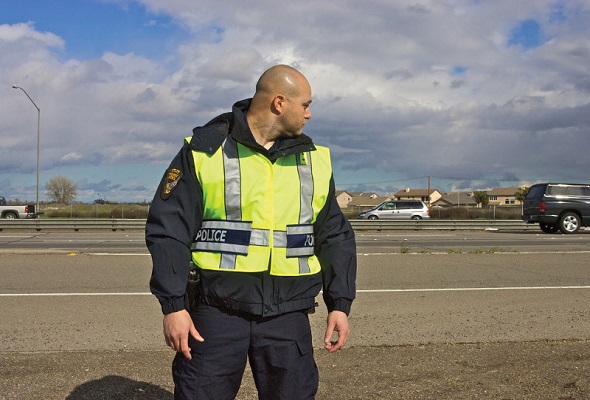
Why Do Hi-Vis Clothing Classes Exist?
Not every workplace creates the same visibility risk.
A worker inside a controlled warehouse, a traffic controller beside a live road and an emergency responder working around moving vehicles can face very different conditions.
High-visibility standards create minimum requirements around things such as:
- Visible background material
- Fluorescent materials
- Retroreflective materials
- Placement of reflective trim
- Garment design
- Day and night visibility
The exact requirements depend on the standard being used.
ANSI vs Australian Hi-Vis Standards
This is the most important distinction for Australian users.
| System | Used Primarily In | How Garments Are Classified |
| ANSI/ISEA 107 | United States | Types such as O, R and P together with performance Classes 1, 2 and 3 |
| AS 4602.1:2024 | Australia | Australian garment classes and conspicuity levels based on the intended visibility conditions and risk environment |
An ANSI Class 2 or Class 3 rating does not automatically mean the garment satisfies an Australian workplace requirement. Certification needs to be checked against the standard and class required by the employer, worksite or activity.
What Is AS 4602.1:2024?
AS 4602.1:2024 is the current Australian Standard covering high-visibility safety garments for high-risk occupational applications.
It is intended for people who may be exposed to hazards involving:
- Moving traffic
- Moving plant
- Moving equipment
- Other high-risk situations where conspicuity is important
The 2024 edition replaced AS 4602.1:2011 and introduced updated garment classifications and additional conspicuity levels.
The standard covers garments designed for different visibility conditions, including:
- Daylight
- Night-time under retroreflected light
- Combined day and night use
- Low-light conditions
- Adverse environmental conditions
Australian Day and Night Hi-Vis Classes
Australian high-visibility garments can be designed for different visibility conditions.
Common terminology includes:
| Classification | General Purpose |
| Day Visibility | Uses high-visibility background material intended to improve conspicuity during daylight. |
| Night Visibility | Uses retroreflective material designed to return directed light, such as vehicle headlights. |
| Day/Night Visibility | Combines high-visibility background material with retroreflective elements for use across both conditions. |
The exact class and level required should be determined from the applicable Australian Standard and workplace risk assessment rather than selected from a generic online chart.
What Changed With AS 4602.1:2024?
The 2024 revision introduced a more detailed system for describing garment conspicuity.
Changes include:
- New conspicuity levels within garment classes
- Additional specifications around arms and legs
- Updated material wash requirements
- Revised garment reference points
- Additional durability requirements
The objective is to provide clearer distinctions between garments intended for different levels of visibility risk.
What Are ANSI Hi-Vis Classes?
ANSI/ISEA 107 uses a different framework from the Australian system.
ANSI performance classes generally include Classes 1, 2 and 3, with increasing requirements around the amount and placement of high-visibility and retroreflective material.
ANSI Class 1
Class 1 is generally associated with lower-risk occupational environments where workers are separated from higher-speed traffic.
ANSI Class 2
Class 2 provides a greater level of visibility and is widely used around roadway, transportation and other environments involving moving vehicles.
ANSI Class 3
Class 3 provides the highest level of conspicuity within the main ANSI garment classes and is designed for higher-risk conditions where maximum visibility is required.
What Are ANSI Type O, Type R and Type P Garments?
ANSI also separates garments according to the type of environment in which they are intended to be used.
| ANSI Type | General Application |
| Type O | Off-road occupational environments where visibility is important but workers are not exposed to roadway traffic. |
| Type R | Roadway and traffic environments where workers may be exposed to moving vehicles. |
| Type P | Public safety users such as police, fire and emergency-service personnel. |
These ANSI types are useful for understanding US-certified products but should not be substituted for Australian workplace requirements.
ANSI Class 2 vs Australian Hi-Vis Requirements
This is particularly relevant to the current 5.11 Australia range.
The 5.11 Responder Hi-Vis Parka™ 2.0 is certified to ANSI/ISEA 107-2020 Type R & P, Class 2.
It also uses:
- 3M® Scotchlite® reflective tape
- 10K/10K waterproof and breathable construction
- Tac Dry® waterproof technology
- Fully seam-sealed construction
- Professional-response features
For Australian professional use: treat the ANSI certification as product information, not automatic proof of local compliance. Confirm whether your employer, regulator or site accepts that standard or requires an AS 4602.1-compliant garment.
How Do You Know if Hi-Vis Clothing Is Australian-Compliant?
Check the garment label and supporting product documentation.
A compliant garment should clearly identify the standard and classification it has been tested or certified against.
For Australian applications, do not rely solely on:
- The garment being fluorescent yellow or orange
- The presence of reflective tape
- The words “high visibility”
- An ANSI class printed on the product page
- The appearance of the garment
The actual compliance marking matters.
Why Garment Design Matters
High-visibility compliance is not simply about using fluorescent fabric.
The design of the garment affects how much visible material can be seen and where it is positioned around the body.
Standards can specify:
- Minimum areas of visible material
- Reflective tape positioning
- Garment coverage
- Visibility from different directions
- Performance after washing and wear
This is why altering a compliant garment can potentially affect how it performs.
What Is Retroreflective Tape?
Retroreflective material is designed to return light toward its source.
When vehicle headlights or another directed light source reaches reflective tape, the material sends a significant amount of that light back toward the source.
This is different from fluorescent fabric, which is primarily used to improve visibility during daylight or other illuminated conditions.
Fluorescent vs Reflective Hi-Vis Material
| Material | Primary Function |
| Fluorescent Background Material | Improves visual contrast and conspicuity during daylight. |
| Retroreflective Material | Returns directed light toward the source to improve night-time visibility. |
| Combined Systems | Use both approaches to improve visibility across day and night conditions. |
What Hi-Vis Class Do Traffic Workers Need?
There is no safe universal answer because the requirement depends on the jurisdiction, road environment, traffic-management plan and workplace procedures.
For example, WorkSafe Victoria guidance for temporary traffic management references Australian high-visibility clothing standards and requires appropriate PPE for workers around live traffic.
If you're working on or near Australian roads, do not select hi-vis clothing using the US ANSI class table alone. Follow the traffic-management requirements, Australian standards and PPE rules applicable to the specific worksite.
What Hi-Vis Clothing Do Police and Emergency Responders Need?
Emergency-service users can have different requirements from ordinary road or construction workers.
The appropriate garment depends on:
- Agency policy
- Roadway exposure
- Weather
- Role
- Required visibility class
- Other protective requirements
It is particularly important to note that AS 4602.1:2024 excludes garments intended for fire-service applications, which can be subject to separate protective-clothing standards.
Hi-Vis Clothing for Construction and Worksites
High-visibility clothing is commonly used as PPE in Australian construction and industrial environments where workers need to remain visible around vehicles and plant.
However, PPE is only one part of risk control.
Employers should identify the hazards and determine the appropriate PPE as part of the broader risk-management process.
The garment should then match:
- The risk environment
- Day or night conditions
- Traffic or equipment exposure
- Weather
- Other PPE being worn
Does Hi-Vis Colour Determine the Class?
No.
Colour is important, but garment classification also depends on design, material performance, coverage and reflective elements.
A fluorescent yellow shirt and a certified high-visibility safety garment are not automatically the same thing.
Does Reflective Tape Automatically Make Clothing Hi-Vis Compliant?
No.
Adding reflective tape to ordinary clothing does not automatically create a compliant high-visibility safety garment.
The finished garment needs to meet the design and material requirements of the applicable standard.
Do Hi-Vis Garments Lose Compliance Over Time?
High-visibility performance can deteriorate through:
- Fading
- UV exposure
- Repeated washing
- Abrasion
- Damaged reflective tape
- Contamination
- Tears
The 2024 Australian standard includes updated durability requirements, reinforcing that high-visibility performance needs to be maintained over the life of the garment.
For cleaning and maintenance guidance, see our guide to cleaning hi-vis jackets and reflective workwear.
Australian Hi-Vis Standards for Learner Riders
High-visibility standards can also apply outside traditional workplaces.
For example, current NSW rules require learner riders to wear an approved high-visibility vest or jacket.
NSW currently recognises garments labelled to:
- AS/NZS 4602.1:2011 Class D/N
- AS 4602.1:2024 Class D/N
- ISO 20471:2013
This is a useful reminder that the correct standard depends on the actual legal or workplace application rather than on appearance alone.
Common Hi-Vis Classification Mistakes
Using ANSI Classes as the Australian Standard
ANSI is a US system. Australian workplaces may require compliance with Australian Standards instead.
Assuming ANSI Class 3 Is Automatically “Better”
A higher ANSI class means greater conspicuity within the ANSI framework, but it does not automatically make the garment the correct or compliant choice for an Australian workplace.
Assuming All Reflective Jackets Are Certified
Reflective material can be used on garments that are not certified high-visibility PPE.
Ignoring Day vs Night Requirements
The conditions in which the garment will be used affect the type of conspicuity required.
Ignoring Workplace Requirements
A compliant garment still needs to be appropriate to the risk and accepted by the employer or worksite.
Assuming Certification Never Changes
Standards are revised. AS 4602.1:2024 has superseded the 2011 Australian edition, so current procurement should account for the latest applicable requirements.
Frequently Asked Questions About Hi-Vis Classes
What are the classes of hi-vis clothing?
The answer depends on the standard. ANSI/ISEA 107 uses Classes 1, 2 and 3 alongside Types O, R and P. Australia uses its own garment classifications under standards such as AS 4602.1:2024.
What is Class 2 hi-vis?
Class 2 is an ANSI/ISEA performance classification commonly used for garments intended for environments involving moving vehicles and greater visibility risk than Class 1.
What is Class 3 hi-vis?
Class 3 is the highest of the main ANSI garment performance classes and provides greater conspicuity requirements within the ANSI framework.
Does Australia use ANSI Class 1, 2 and 3?
Not as its primary national high-visibility garment classification system. Australian occupational garments are generally assessed against Australian Standards such as AS 4602.1:2024.
What is the current Australian hi-vis standard?
AS 4602.1:2024 is the current Australian standard for high-visibility safety garments used in high-risk occupational applications involving moving traffic, plant or equipment.
What happened to AS/NZS 4602.1:2011?
The 2011 edition has been superseded by AS 4602.1:2024. Some regulations or transitional requirements may still refer to the earlier standard, so always check the rules relevant to the particular application.
Does a hi-vis jacket need reflective tape?
That depends on whether the garment is intended for day, night or combined day/night visibility and on the applicable standard and classification.
Are ANSI-certified jackets legal to wear in Australia?
An ANSI-certified jacket can be sold and worn in Australia, but that does not automatically mean it satisfies a specific Australian workplace PPE requirement. Check the applicable worksite or regulatory standard.
How can I tell if my hi-vis clothing is compliant?
Check the garment's compliance label and documentation for the standard, class and level it has been certified against, then compare that with the requirements of your workplace or activity.
Choose Hi-Vis Clothing by the Standard and the Risk
The right high-visibility garment is not simply the brightest jacket available.
Start with the risk environment, whether the garment will be used during the day, night or both, and the standard required by your employer or activity.
For Australian workplace use, AS 4602.1:2024 is now the key current high-visibility garment standard for high-risk applications involving moving traffic, plant and equipment. ANSI classifications remain useful for understanding US-certified products, but they should not be treated as a substitute for Australian requirements.
The current 5.11 Responder Hi-Vis Parka™ 2.0 is certified to ANSI/ISEA 107-2020 Type R & P, Class 2 and includes 3M® Scotchlite® reflective tape and waterproof construction. Australian users should confirm whether that certification meets their employer or site requirements before relying on it as required workplace PPE.
Explore the current 5.11 Jackets & Parkas or browse the wider 5.11 Tactical Outerwear range.